Workplace Etiquette: Essential Skills for Professionals
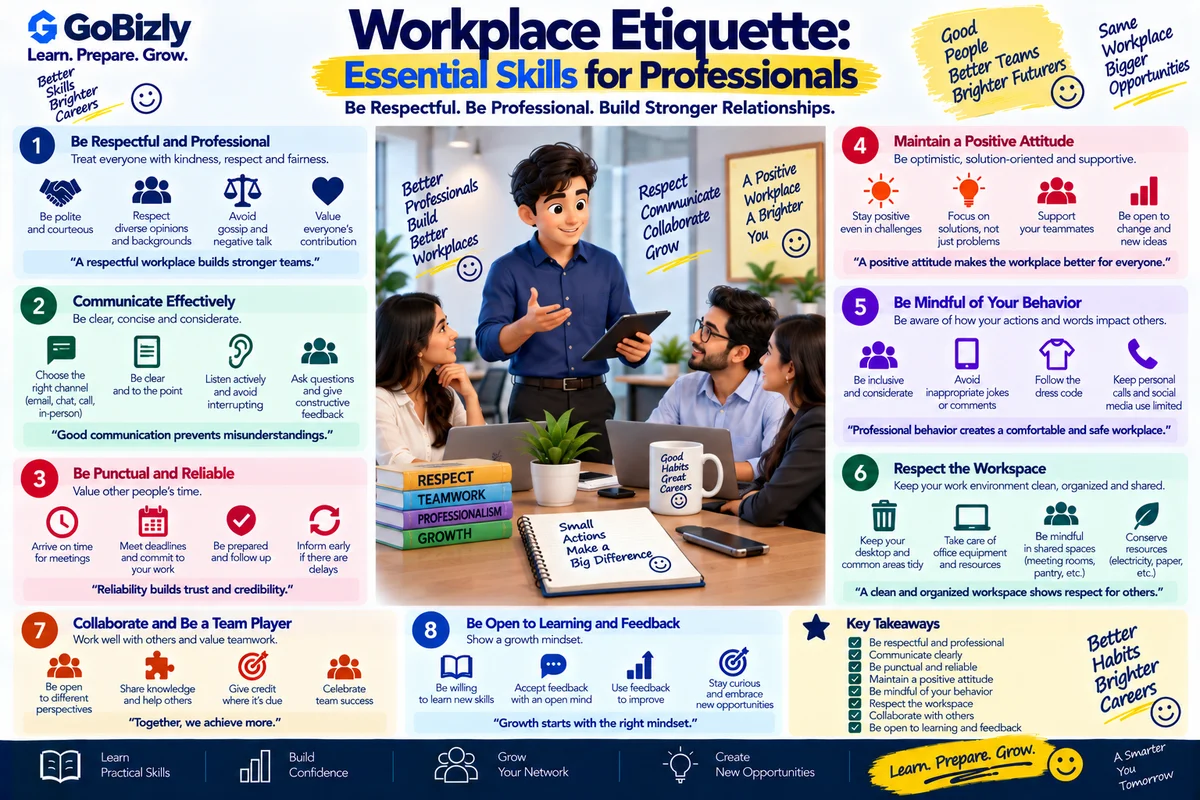
Workplace Etiquette: Essential Skills for Professionals
Workplace etiquette refers to the behaviors and communication practices that help people work together respectfully and professionally.
It isn't about following a rigid set of rules.
Different organizations have different cultures.
However, some professional behaviors are broadly useful across workplaces.
These include:
Being respectful
Communicating clearly
Being dependable
Respecting time
Following workplace policies
Handling disagreements professionally
Maintaining appropriate boundaries
1. Be Punctual
Respect other people's time.
This applies to:
Meetings
Interviews
Work shifts
Deadlines
Client calls
If you expect to be late, communicate as early as reasonably possible.
2. Respect Other People's Time
Not every issue requires a meeting.
Before scheduling one, ask:
Can this be resolved through a message or email?
If a meeting is necessary, provide enough context so participants can prepare.
3. Be Prepared for Meetings
Before attending a meeting, review:
Agenda
Relevant documents
Previous decisions
Your responsibilities
Questions you need answered
Preparation makes meetings more productive.
4. Respect Different Communication Styles
People may communicate differently.
Some prefer detailed written information.
Others prefer a quick discussion.
Some may need time to think before responding.
Professionalism involves adapting while maintaining clear communication.
5. Avoid Interrupting
During discussions, allow people to complete their points.
If you need to respond, take a note or wait for an appropriate pause.
In virtual meetings, use available features such as raising a hand when appropriate.
6. Practice Digital Etiquette
Workplace communication can happen through:
Email
Teams
Slack
WhatsApp
Project management tools
Video calls
Each channel may have different expectations.
Avoid sending unnecessary messages repeatedly across multiple platforms.
7. Be Careful With Workplace Chats
Work chats are still professional communication.
Avoid:
Excessive personal messages
Unnecessary tagging
Repeated messages
Sharing confidential information
Sending content inappropriate for the workplace
8. Respect Confidential Information
You may encounter information about:
Customers
Employees
Projects
Business plans
Financial information
Internal processes
Don't share confidential information outside authorized channels.
When in doubt, check company policy.
9. Handle Disagreements Professionally
Disagreement isn't automatically a problem.
Teams can have different opinions.
Focus on:
The issue
Evidence
Business objectives
Possible solutions
Avoid turning professional disagreement into personal criticism.
10. Give Credit to Others
If someone contributes to your work, acknowledge their contribution.
For example:
"The reporting structure was developed with inputs from the analytics team."
Giving credit helps build trust and demonstrates professionalism.
11. Accept Responsibility
If you make a mistake, don't immediately blame someone else.
A professional response can be:
"I missed that validation step. I'll correct it and add it to my checklist so it doesn't happen again."
Taking responsibility should be followed by corrective action.
12. Respect Workplace Boundaries
Professional relationships need appropriate boundaries.
This can include respecting:
Personal time
Privacy
Workspace
Communication preferences
Company policies
Be particularly mindful of contacting colleagues outside normal working hours unless there is a legitimate reason.
13. Dress Appropriately for the Environment
Workplace expectations differ significantly by company and role.
Follow the organization's dress expectations and consider:
Client meetings
Office events
Interviews
Presentations
When uncertain, check the organization's guidelines.
14. Practice Good Meeting Etiquette
During meetings:
Join on time
Mute when appropriate
Avoid unnecessary interruptions
Stay engaged
Keep contributions relevant
Record actions and decisions
For virtual meetings, check your camera, microphone and internet connection beforehand when possible.
15. Be Reliable
Reliability means people can reasonably expect you to:
Complete commitments
Communicate delays
Follow agreed processes
Respond appropriately
Escalate issues when necessary
Reliability is built through consistent behavior.
16. Respect Different Backgrounds and Perspectives
Modern workplaces include people with different experiences and perspectives.
Professional behavior means treating colleagues respectfully and avoiding assumptions based on personal characteristics.
Follow your organization's policies regarding respectful workplace conduct.
17. Workplace Etiquette for New Employees
When joining a new organization:
Observe how the team communicates.
Learn the expected processes.
Understand communication channels.
Ask questions when unsure.
Take notes.
Respect existing workflows.
Gradually adapt to the team culture.
You don't need to understand everything on your first day.
18. Build a Professional Reputation
Your professional reputation is influenced by repeated behavior.
People may remember whether you:
Meet commitments
Communicate clearly
Help colleagues
Take ownership
Respect others
Handle pressure professionally
Small behaviors accumulate over time.
Workplace Etiquette Checklist
☐ Be punctual
☐ Respect people's time
☐ Prepare for meetings
☐ Listen without unnecessary interruption
☐ Communicate professionally
☐ Use workplace chat appropriately
☐ Protect confidential information
☐ Handle disagreements respectfully
☐ Give credit to others
☐ Take responsibility for mistakes
☐ Respect boundaries
☐ Follow workplace policies
☐ Be dependable
Conclusion
Workplace etiquette isn't about trying to appear perfect.
It is about creating a professional environment where people can communicate, collaborate and complete their work effectively.
Observe your workplace, understand its expectations and consistently treat people with respect.
Professionalism is often demonstrated through small, repeated behaviors.
Learn. Prepare. Grow.