Time Management for Students: A Practical Guide
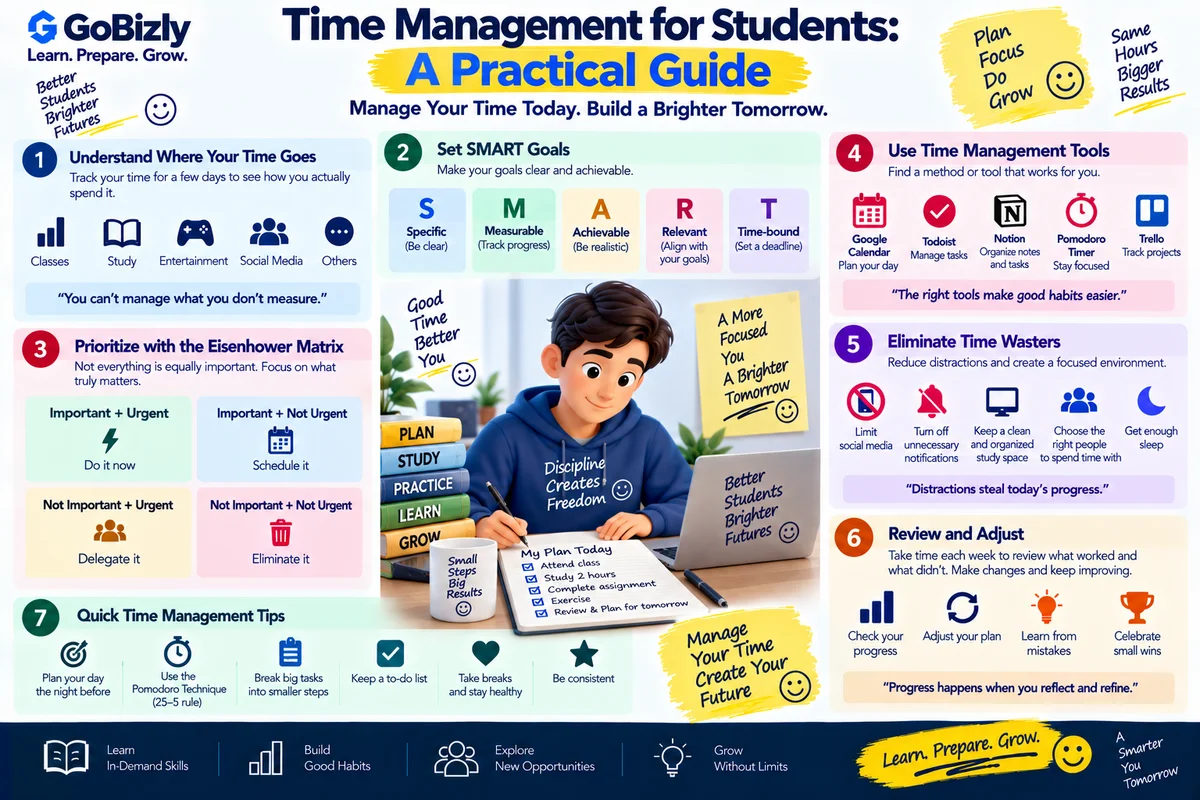
1. Understand Where Your Time Goes
Before changing your schedule, observe how you currently spend your time.
For a few days, note activities such as:
Classes
Studying
Assignments
Travel
Social media
Entertainment
Sleep
Personal activities
You may discover time that can be used more intentionally.
2. Separate Important and Urgent Tasks
Not every task deserves the same priority.
Consider two factors:
Importance: How much does this task matter?
Urgency: How soon does it need to be completed?
For example, an assignment due tomorrow may require immediate attention.
A skill you want to develop over six months may be important but not urgent.
3. Create a Weekly Plan
At the beginning of each week, identify:
Classes
Deadlines
Exams
Assignments
Study sessions
Personal commitments
Then allocate realistic time blocks.
Don't fill every available minute.
Leave some flexibility for unexpected tasks.
4. Break Large Tasks Into Smaller Tasks
"Prepare for exams" is too broad.
Instead:
Exam Preparation
→ Review Chapter 1
→ Complete practice questions
→ Review mistakes
→ Study Chapter 2
→ Take a mock test
Smaller tasks are easier to start and track.
5. Use a Daily Priority List
At the beginning of the day, identify the most important tasks.
A simple approach:
Must Do
Critical tasks.
Should Do
Important but less urgent tasks.
Could Do
Optional tasks if time is available.
This prevents your list from becoming unrealistic.
6. Estimate Time Realistically
Students sometimes underestimate how long tasks take.
Instead of assuming:
"This assignment will take one hour."
Estimate:
"Research: 30 minutes
Outline: 20 minutes
Draft: 60 minutes
Review: 20 minutes"
This makes planning more realistic.
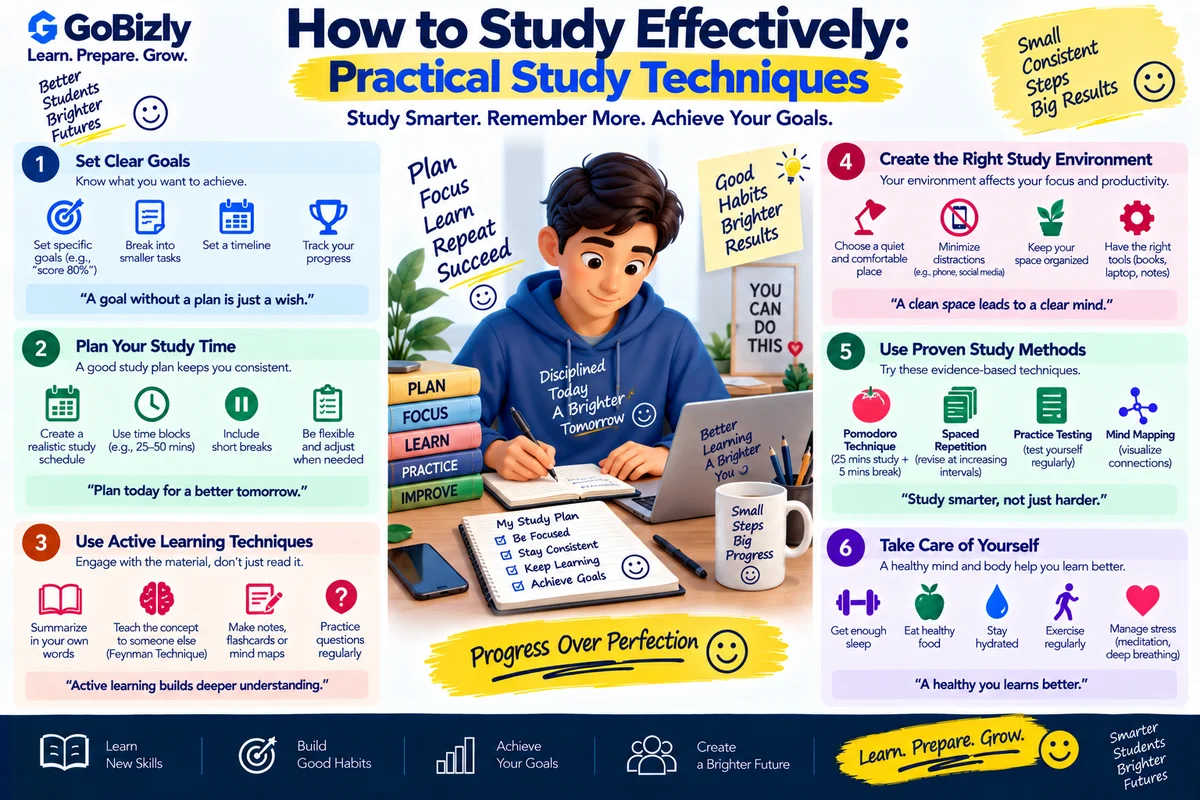
7. Use Time Blocks
Assign specific periods to specific activities.
Example:
9:00–10:00 — Study
10:00–10:30 — Break
10:30–11:30 — Assignment
4:00–5:00 — Revision
Time blocking can reduce the need to constantly decide what to do next.
8. Avoid Constant Task Switching
Moving repeatedly between:
Studying
Social media
Messages
Videos
Assignments
can make it harder to maintain focus.
Try completing a defined block of one activity before switching.
9. Manage Your Phone
You can use simple strategies such as:
Turn off unnecessary notifications
Use focus mode
Keep the phone away during study
Set specific times to check messages
Remove distracting apps from your study environment
10. Plan Around Deadlines
Don't wait until the deadline to begin.
If an assignment is due Friday:
Monday → Understand requirements
Tuesday → Research
Wednesday → Draft
Thursday → Review
Friday → Final submission
Adjust the plan based on the actual workload.
11. Use a Calendar and Task List Together
A calendar answers:
When will I do it?
A task list answers:
What needs to be done?
Using both can make planning clearer.
12. Protect Study Time
Treat planned study sessions as commitments.
If something unavoidable comes up, reschedule the session instead of simply abandoning it.
Consistency matters more than having a perfect schedule.
13. Avoid Overplanning
A complicated productivity system can become another task.
Start with:
Calendar
Task list
Weekly plan
Daily priorities
Add more tools only if they solve a real problem.
14. Make Time for Rest
Effective productivity isn't about studying continuously.
Include time for:
Sleep
Meals
Exercise
Breaks
Family
Social activities
A sustainable schedule should include recovery.
15. Review Your Week
At the end of the week, ask:
What did I complete?
What was delayed?
Why was it delayed?
What took longer than expected?
What should I change next week?
This turns time management into a continuous improvement process.
Student Time Management Checklist
☐ Track how you spend time
☐ Identify important tasks
☐ Create a weekly plan
☐ Break large tasks down
☐ Set daily priorities
☐ Estimate time realistically
☐ Use time blocks
☐ Reduce task switching
☐ Manage phone distractions
☐ Plan before deadlines
☐ Schedule breaks
☐ Review your week
Conclusion
Time management isn't about filling every hour with work.
It is about making deliberate choices about where your time goes.
Plan realistically, prioritize important work and leave room for unexpected events and rest.
Manage your time so your priorities have time.
Learn. Prepare. Grow.