SEO Basics: How Search Engine Optimization Works
SEO Basics: How Search Engine Optimization Works
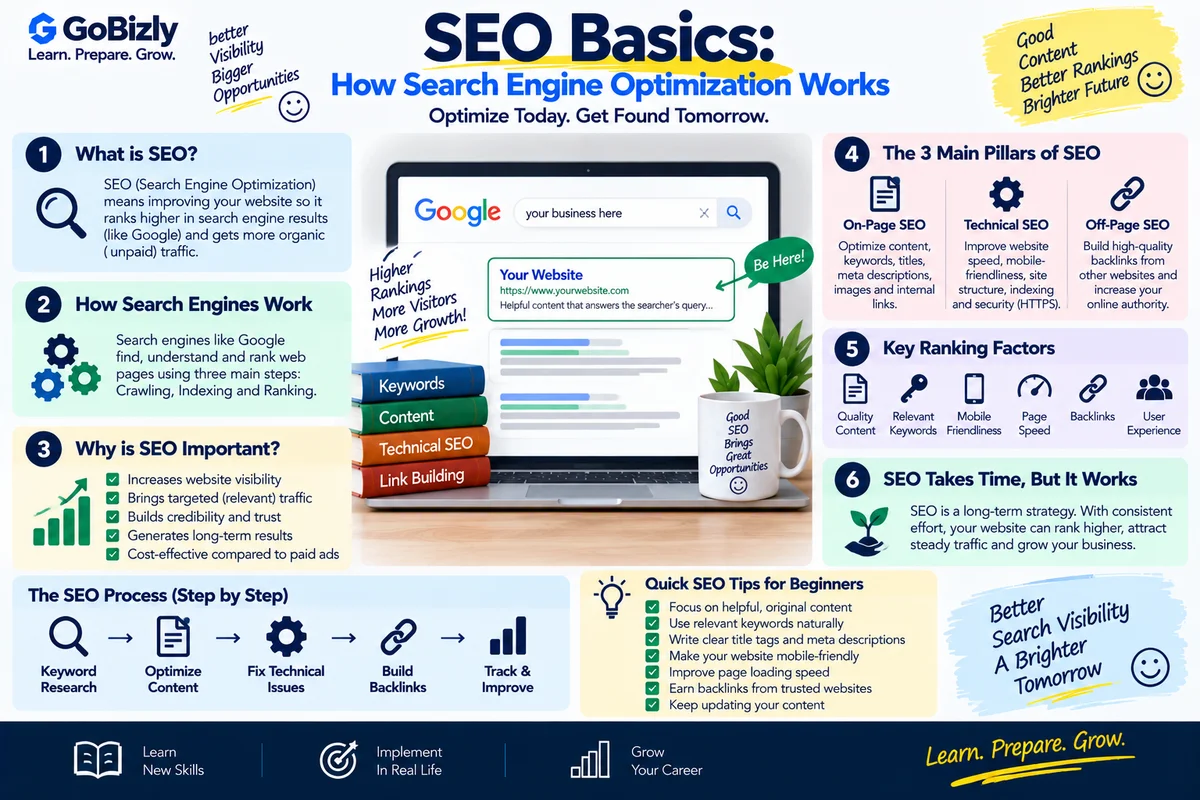
Search Engine Optimization, commonly called SEO, is the process of improving a website and its content so that search engines can understand it and users can discover it through relevant organic search results.
SEO involves several areas:
Content
Search intent
Keywords
Technical structure
Internal links
External links
User experience
Website accessibility
SEO is not simply about adding keywords to a page.
1. How Search Engines Discover Websites
Search engines use automated systems to discover and analyze web pages.
A simplified process is:
Crawling → Processing → Indexing → Ranking
Search engines use many signals to determine which results to show for a query.
2. Crawling
Search engine crawlers discover pages through links and other mechanisms.
A website should make it possible for important pages to be discovered and accessed.
3. Indexing
After a page is discovered, a search engine may process and store information about it in its index.
Being indexed doesn't guarantee that a page will rank highly for a particular query.
4. Ranking
When someone searches, the search engine determines which results are most relevant to the query.
Many factors can influence ranking.
There is no single formula that guarantees a top position.
5. Search Intent
Search intent is the underlying reason behind a user's search.
For example:
"What is SEO?"
is primarily informational.
"Buy running shoes online"
has a transactional intent.
Understanding intent helps you create content that answers what the searcher actually wants.
6. Keyword Research
Keyword research helps identify the words and phrases people use when searching.
Look at:
Search relevance
Search intent
Competition
Topic coverage
Business relevance
Don't choose keywords only because they have high search volume.
7. On-Page SEO
On-page SEO includes elements you can manage on the page.
Examples include:
Title
Headings
Content
Internal links
Images
Alt text
URLs
Make the page useful to the reader first.
8. SEO Titles
An SEO title helps describe the page.
A good title should:
Clearly communicate the topic
Be relevant to the page
Encourage an appropriate click
Avoid unnecessary keyword repetition
9. Meta Descriptions
A meta description provides a summary of a page.
It can help users understand what they may find after clicking a search result.
Write it naturally and accurately.
10. Headings
Use headings to organize content.
A clear structure can make long articles easier to understand.
For example:
H1: Main topic
H2: Major section
H3: Supporting section
Don't use headings simply to manipulate search engines.
11. Content Quality
Useful content should:
Answer the user's question
Be accurate
Be understandable
Provide relevant examples
Avoid unnecessary repetition
Longer content isn't automatically better.
12. Internal Linking
Internal links connect pages within your website.
They can help users discover related information and help search engines understand relationships between pages.
For example:
An article about interview preparation can link to a related interview guide or resource.
13. Technical SEO
Technical SEO covers aspects such as:
Crawlability
Indexing
Site structure
Page performance
Mobile usability
Structured data where appropriate
Technical issues can make it harder for search engines and users to access content.
14. Mobile Experience
Many users access websites through mobile devices.
Make sure your pages are:
Readable
Responsive
Easy to navigate
Comfortable to use
15. Website Speed
Page performance affects user experience.
Review factors such as:
Image size
Unnecessary scripts
Page structure
Hosting performance
Avoid adding unnecessary elements that slow the page.
16. Backlinks
A backlink is a link from another website to your website.
Links can be useful discovery and authority signals, but quality matters.
Don't rely on manipulative link-building practices.
17. Local SEO
For businesses serving specific geographic areas, local SEO can help people discover relevant services.
Important areas can include:
Business information
Google Business Profile
Location pages
Reviews
Consistent business details
The approach depends on the business model.
18. SEO Analytics
Monitor relevant data such as:
Organic traffic
Search queries
Clicks
Impressions
Click-through rate
Indexed pages
Conversions
Use trends rather than focusing on one number.
19. SEO Takes Time
SEO generally isn't an instant marketing channel.
Results can depend on:
Competition
Website authority
Content quality
Technical health
Search demand
Consistency
Avoid promises of guaranteed rankings.
20. A Simple SEO Learning Path
Start with:
Search intent
↓
Keyword research
↓
Content
↓
On-page SEO
↓
Technical SEO
↓
Internal linking
↓
Analytics
↓
Continuous improvement
SEO Checklist
☐ Understand search intent
☐ Research relevant topics
☐ Create useful content
☐ Optimize page titles
☐ Write useful meta descriptions
☐ Use clear headings
☐ Add relevant internal links
☐ Optimize images
☐ Review mobile experience
☐ Monitor page performance
☐ Check indexing
☐ Track organic performance
☐ Update content when necessary
Conclusion
SEO is much more than inserting keywords into articles.
It combines useful content, search intent, technical accessibility, website structure and ongoing measurement.
Start with the user.
Create genuinely useful pages.
Make them easy to understand and access.
Then use search data to identify opportunities for improvement.
Create for people first. Optimize thoughtfully for search.
Learn. Prepare. Grow.