How to Study Effectively: Practical Study Techniques
How to Study Effectively: Practical Study Techniques
Studying for long hours doesn't automatically mean you are learning effectively.
Effective studying is about understanding information, remembering it and being able to use it when needed.
Different students learn differently, but several practical techniques can make study sessions more structured and productive.
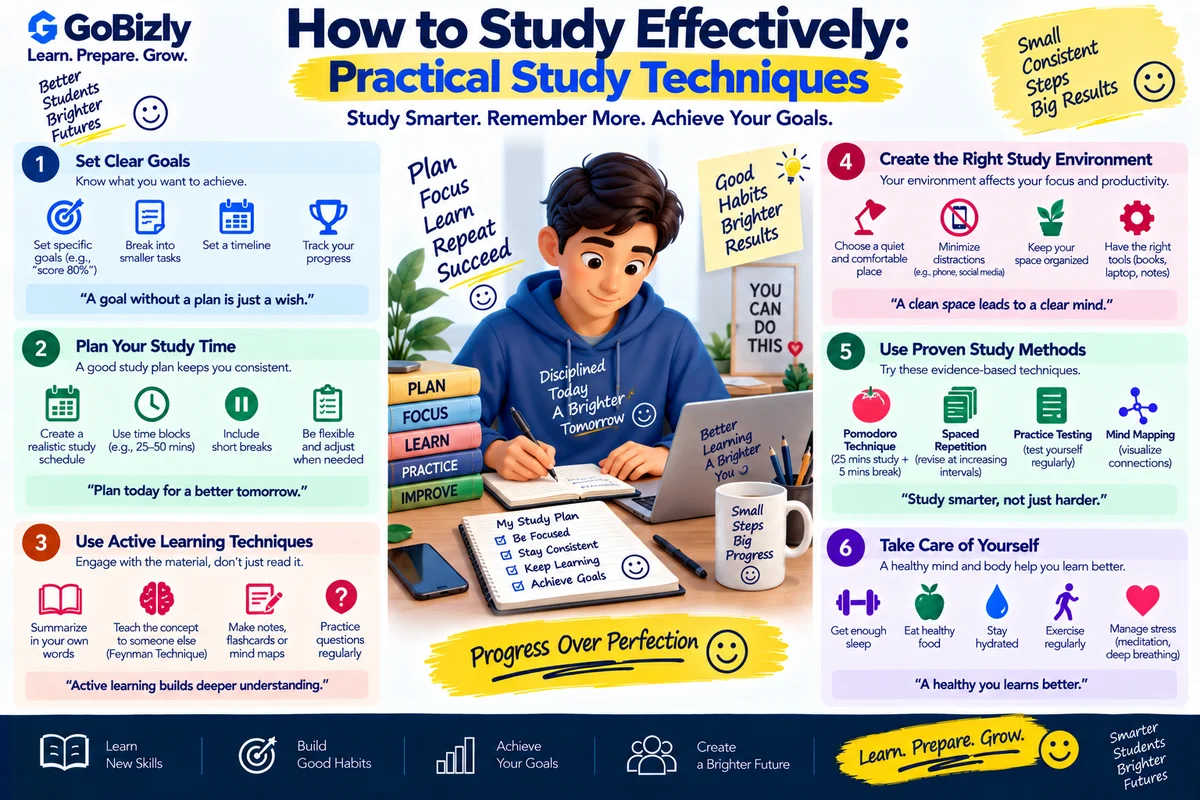
1. Start With a Clear Goal
Before beginning a study session, decide what you want to accomplish.
Instead of:
"I will study for three hours."
Try:
"I will understand three chapters and complete 20 practice questions."
A specific goal makes progress easier to measure.
2. Understand Before Memorizing
Try to understand the concept before attempting to memorize details.
Ask:
What does this mean?
Why does it matter?
How does it work?
Can I explain it in my own words?
Can I give an example?
Understanding creates a stronger foundation for later revision.
3. Use Active Recall
Active recall means trying to retrieve information from memory instead of simply reading it repeatedly.
For example:
Read a concept.
Close your notes.
Explain the concept from memory.
Check what you missed.
Repeat.
You can also use flashcards and practice questions.
4. Try Spaced Repetition
Instead of studying everything immediately before an exam, review material at intervals.
A simple schedule might be:
Day 1 → Learn
Day 2 → Review
Day 4 → Review
Day 7 → Review
Day 14 → Review
Adjust the schedule according to the difficulty of the topic and your exam timeline.
5. Practice With Questions
Practice questions help you determine whether you can actually apply what you've learned.
After studying a topic, try:
Multiple-choice questions
Short-answer questions
Numerical problems
Scenario questions
Previous exam questions
Don't just check whether an answer is correct.
Understand why it is correct.
6. Explain the Topic
Try teaching the concept to someone else—or explain it aloud as if you're teaching a beginner.
If you struggle to explain something clearly, that can indicate an area that needs further study.
7. Break Large Topics Into Smaller Parts
A large subject can feel overwhelming.
Break it into manageable sections.
For example:
Digital Marketing
→ SEO
→ Paid Advertising
→ Social Media
→ Analytics
→ Email Marketing
Then study one area at a time.
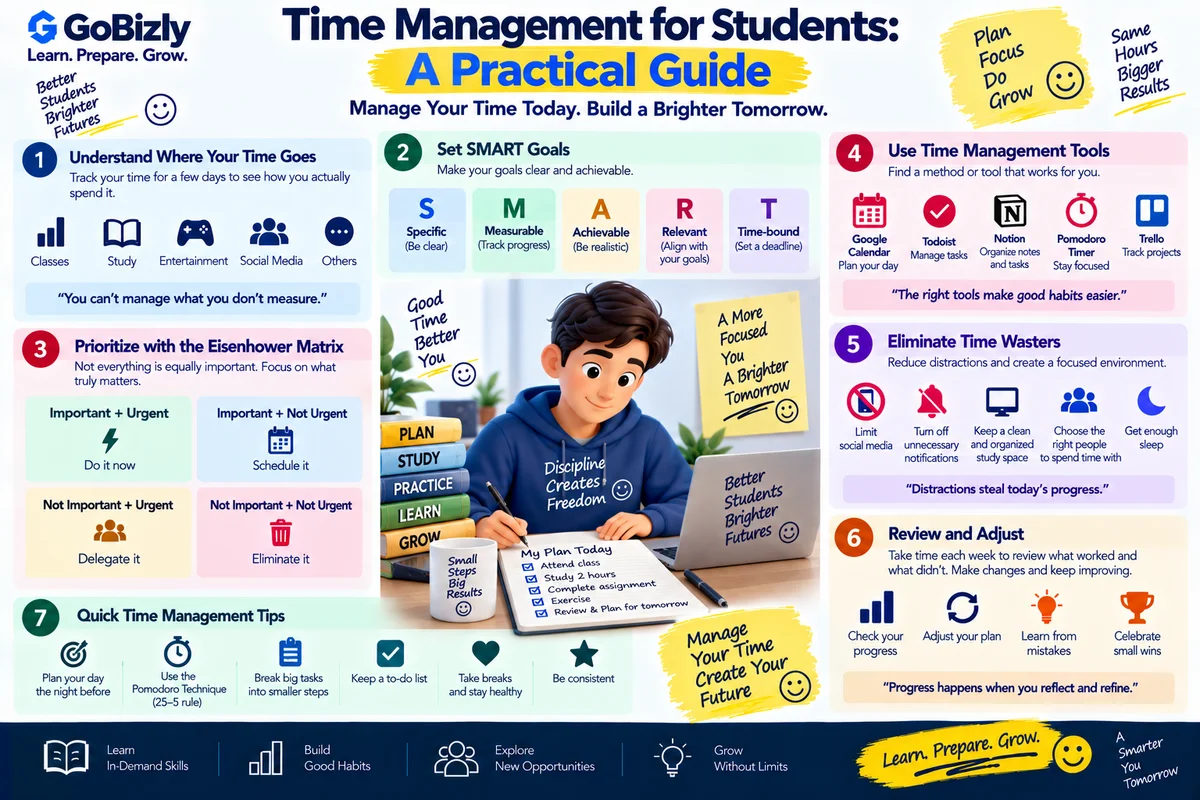
8. Use Focused Study Sessions
Create periods where you study one task without unnecessary distractions.
For example:
45 minutes focused study
↓
10-minute break
↓
45 minutes focused study
The exact duration doesn't matter as much as finding a schedule you can consistently maintain.
9. Reduce Distractions
Common distractions include:
Phone notifications
Social media
Unnecessary browser tabs
Background conversations
Frequent task switching
Try keeping your phone away or using focus settings during study sessions.
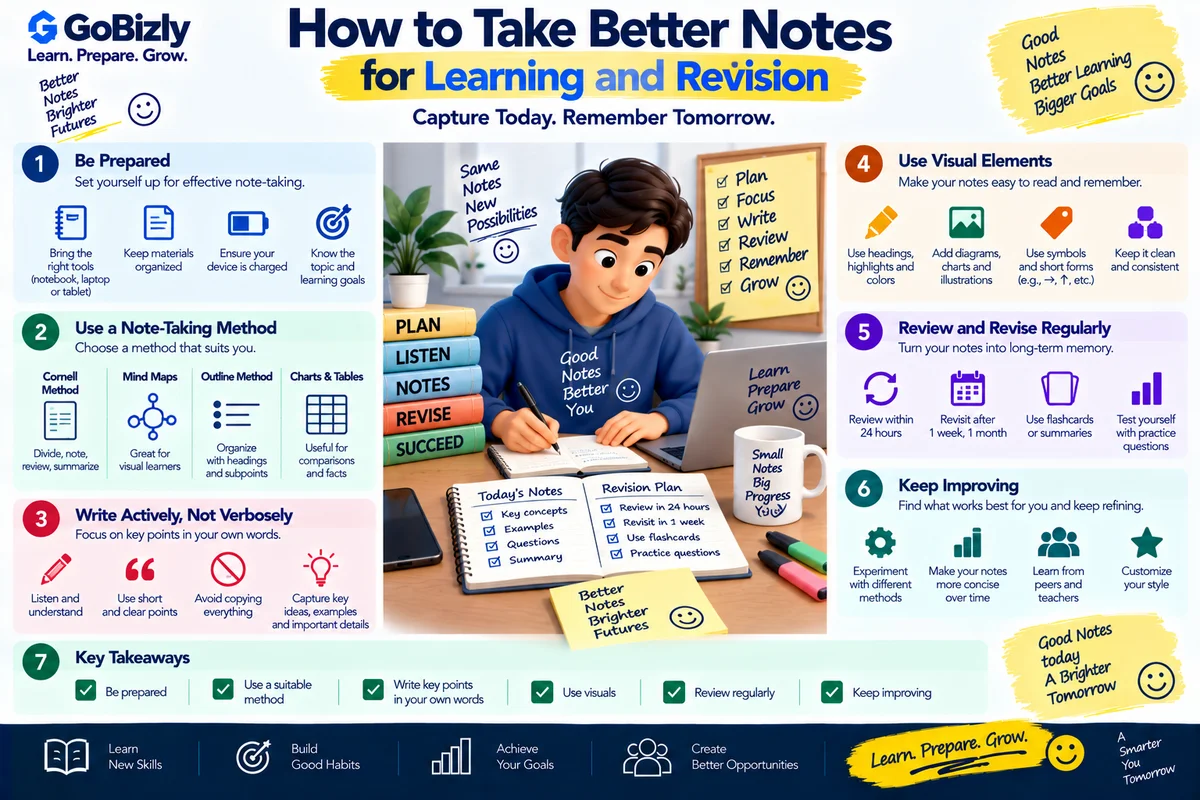
10. Take Useful Notes
Don't try to write down every sentence.
Focus on:
Key concepts
Definitions
Examples
Formulas
Questions
Areas you don't understand
Your notes should make future revision easier.
11. Review Your Mistakes
Mistakes are useful learning signals.
After a practice test, identify:
What did I get wrong?
Why did I get it wrong?
What should I remember next time?
Keep a small mistake log for topics that repeatedly cause problems.
12. Mix Different Practice Methods
You don't have to use one study method for everything.
Combine:
Reading
Active recall
Flashcards
Practice questions
Writing
Problem solving
Teaching
Mock tests
Different activities can help you approach the material from different angles.
13. Study Difficult Topics When You're Focused
If possible, schedule challenging topics during periods when you are most alert.
Use easier tasks for lower-energy periods.
For example:
High-focus period
→ New concepts and problem solving
Lower-focus period
→ Reviewing notes or organizing materials
14. Prepare for the Exam Format
Study in a way that reflects how you will eventually be assessed.
If the exam involves:
Problems
→ Solve problems.
Essays
→ Practice writing structured answers.
Multiple-choice questions
→ Practice questions and review explanations.
Presentations
→ Practice speaking.
15. Avoid Last-Minute Cramming When Possible
Cramming can help you review information quickly, but it can make studying stressful and leave little time for meaningful practice.
A better approach is to distribute learning and revision across multiple sessions whenever possible.
Practical Study Checklist
☐ Set a clear study goal
☐ Understand concepts before memorizing
☐ Use active recall
☐ Use spaced review
☐ Practice questions
☐ Explain concepts in your own words
☐ Break large topics into sections
☐ Use focused study sessions
☐ Reduce distractions
☐ Take useful notes
☐ Review mistakes
☐ Practice according to the exam format
Conclusion
Effective studying isn't about spending the maximum number of hours at your desk.
It is about using your time deliberately.
Set clear goals, actively retrieve information, practice regularly and review your mistakes.
Study with a method, not just with more hours.
Learn. Prepare. Grow.