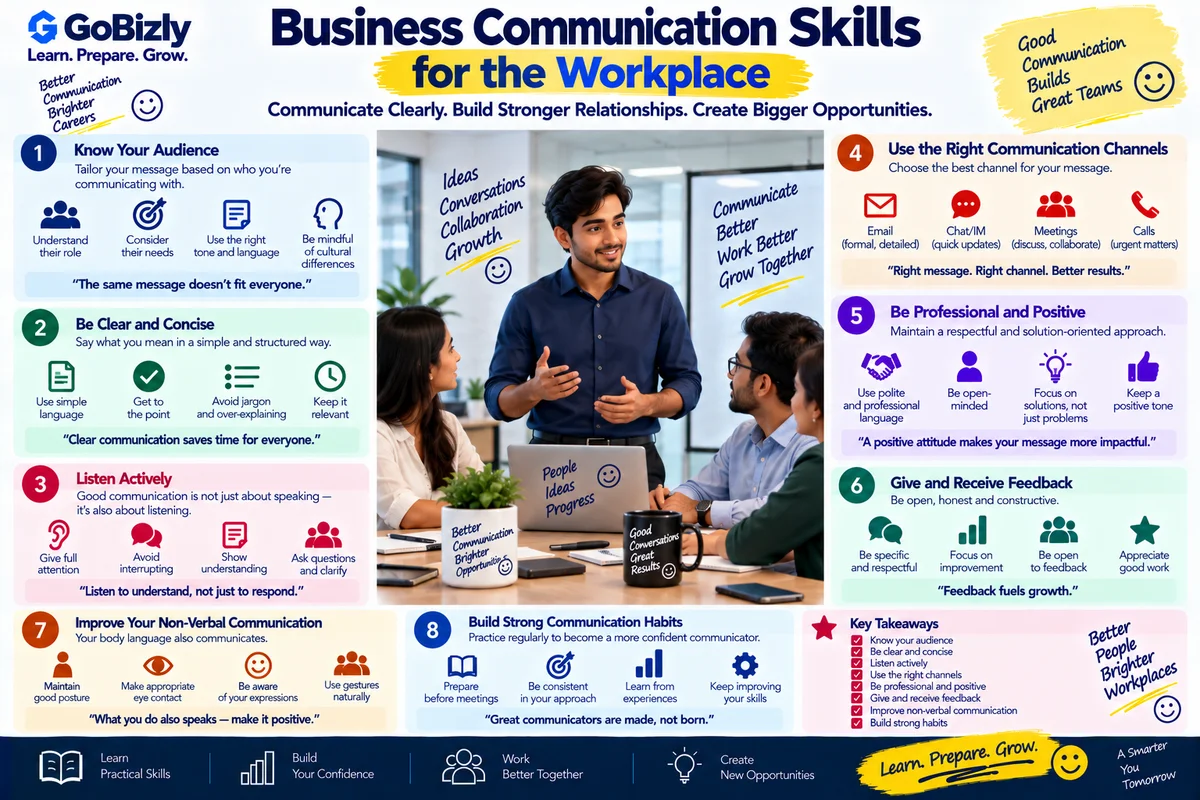
How to Speak Confidently in Public and Professional Situations
How to Speak Confidently in Public and Professional Situations
Speaking in front of other people can feel uncomfortable.
You may experience:
Nervousness
Forgetting what you wanted to say
Speaking too quickly
Difficulty organizing thoughts
Fear of making mistakes
Confidence isn't necessarily the absence of nervousness.
It can develop through preparation, practice and repeated exposure.
1. Prepare Before You Speak
Confidence often begins before the conversation.
Understand:
Your topic
Your objective
Your audience
Your key points
Your expected outcome
Preparation reduces uncertainty.
2. Know Your Main Message
Before a presentation or meeting, ask:
What is the one thing I want people to understand?
Build your communication around that point.
3. Use a Simple Structure
A useful structure is:
Opening → Main Points → Example → Conclusion
This works for:
Presentations
Interviews
Meetings
Group discussions
Short speeches
4. Practice Out Loud
Reading your notes silently isn't enough.
Speak your presentation or answer aloud.
This helps you identify:
Difficult sentences
Missing information
Unnatural wording
Timing issues
5. Don't Memorize Every Sentence
Memorizing an entire presentation can make it difficult to recover if you forget one line.
Instead, remember:
Key points → Examples → Conclusion
Then explain them naturally.
6. Slow Down
Nervous speakers often increase their speaking speed.
Use deliberate pauses.
A pause can help you:
Think
Breathe
Emphasize an important point
Give the audience time to process information
7. Make Eye Contact Naturally
During a conversation or presentation, look at people rather than constantly looking down.
You don't need to stare at one person.
Move your attention naturally around the room.
8. Improve Your Posture
A comfortable upright posture can make your presentation look more composed.
Avoid:
Constantly looking at the floor
Hiding behind notes
Excessive movement
Aim for natural, relaxed body language.
9. Use Your Hands Naturally
Gestures can support communication.
Avoid trying to control every movement.
Use natural gestures when they help emphasize your point.
10. Handle Mistakes Calmly
You may:
Forget a word
Mispronounce something
Lose your train of thought
Pause.
Correct yourself if necessary.
Continue.
A small mistake doesn't automatically ruin a presentation.
11. Practice With Small Audiences
If public speaking feels difficult, don't immediately start with a large audience.
Try:
Speaking alone → Recording → One friend → Small group → Larger group
Gradual practice can make speaking situations more familiar.
12. Practice Presentations
Choose a simple topic.
Prepare a three-minute presentation.
Record yourself.
Review:
Clarity
Pace
Structure
Eye contact
Repetition
Repeat after making improvements.
13. Prepare for Meetings
Before a meeting, know:
Why you're attending
What information you need
What you may need to contribute
What questions you have
Preparation can make participation easier.
14. Prepare for Interviews
Interview confidence improves when you know:
Your resume
Your projects
Your skills
The role
The company
Common questions
Preparation gives you a foundation for responding naturally.
15. Ask Questions Confidently
If you don't understand something, ask.
For example:
"Could you clarify what you mean by that requirement?"
A clear question is usually better than pretending you understood.
16. Don't Compare Yourself to Expert Speakers
Someone who has spoken publicly for years will naturally be more experienced.
Compare your current performance with your previous performance.
Look for small improvements.
17. Build Knowledge
Confidence isn't only about speaking.
Knowing your subject makes communication easier.
Read.
Practice.
Research.
Ask questions.
Build genuine understanding.
18. Learn to Handle Difficult Questions
If you don't immediately know the answer, take a moment.
You can say:
"That's an interesting question. Let me think about that for a moment."
Then structure your response.
If you don't know, be honest.
19. Practice Professional Communication
Confidence also means communicating appropriately.
Practice:
Email
Meetings
Presentations
Interviews
Recruiter conversations
Team discussions
Different situations require different communication styles.
20. Create a 15-Minute Daily Practice Routine
5 Minutes
Read something aloud.
5 Minutes
Speak about a random topic.
5 Minutes
Record and review your response.
Do this consistently for several weeks.
Confidence-Building Checklist
☐ Prepare your topic
☐ Know your main message
☐ Organize your points
☐ Practice aloud
☐ Record yourself
☐ Slow down
☐ Use natural eye contact
☐ Maintain comfortable posture
☐ Practice presentations
☐ Practice interviews
☐ Ask questions
☐ Learn from mistakes
☐ Gradually increase exposure
☐ Review your progress
Conclusion
Confident communication is a skill that can be developed.
You don't need to become the loudest person in the room.
Focus on being:
Clear
Prepared
Relevant
Respectful
Consistent
Practice regularly and give yourself time to improve.
Confidence grows when preparation meets practice.
Learn. Prepare. Grow.