How to Search for Jobs More Effectively
How to Search for Jobs More Effectively
A job search can become exhausting when every search turns into dozens of applications with little organization.
A more structured approach can help.
Instead of simply asking:
"Where are the jobs?"
ask:
"Which roles fit my skills, goals and current experience?"
Then build a repeatable process around finding, evaluating, applying for and tracking those opportunities.
1. Define Your Target Roles
Start with a shortlist of job titles.
For example:
Marketing Executive
Business Analyst
Operations Associate
Data Analyst
HR Associate
Programmatic Specialist
Your target roles can evolve as you learn more about your interests.
2. Identify Your Target Industries
Think about the industries you're interested in.
For example:
Technology
Financial services
E-commerce
Healthcare
Advertising
Consulting
Education
This can help narrow your search.
3. Understand the Skills Required
Review several job descriptions for your target roles.
Look for recurring skills.
Create three lists:
Skills I Have
Skills I'm Developing
Skills I Need to Learn
This creates a practical development roadmap.
4. Use Multiple Job Sources
Don't depend entirely on one platform.
Consider:
Company career pages
Job portals
Professional networking platforms
Recruitment agencies
College placement services
Alumni networks
Industry communities
Different employers use different hiring channels.
5. Search Company Career Pages
Make a list of organizations you're interested in.
Visit their career pages regularly.
Search using multiple terms.
For example:
Analyst
Associate
Executive
Coordinator
Specialist
Trainee
6. Use Better Search Keywords
A broad search like:
"jobs"
isn't very useful.
Try combinations such as:
"Digital Marketing Executive Hyderabad"
or:
"Junior Business Analyst Remote"
or:
"Graduate Operations Associate"
Use role + experience level + location or work arrangement where appropriate.
7. Read the Full Job Description
Don't apply based only on the title.
Review:
Responsibilities
Required skills
Qualifications
Experience
Location
Work arrangement
Application instructions
Determine whether the opportunity is genuinely relevant.
8. Prioritize Relevant Applications
Not every opening deserves the same amount of preparation.
Spend more time tailoring applications for roles that closely match your background and goals.
This can make the process more manageable.
9. Tailor Your Resume
Highlight relevant:
Skills
Projects
Experience
Certifications
Achievements
Use terminology from the job description when it accurately describes your experience.
Don't copy keywords without having the underlying skill.
10. Tailor Your Application Message
If a message or cover letter is appropriate, connect:
Your background → Role requirements → Interest
Keep it concise.
Avoid sending a generic paragraph to every recruiter.
11. Track Every Application
Create a simple tracker.
Company | Role | Date | Source | Status |
|---|---|---|---|---|
Company A | Analyst | Sept 20 | Career Page | Applied |
Company B | Executive | Sept 21 | Job Portal | Screening |
Company C | Associate | Sept 22 | Follow-up |
Add interview dates and follow-ups as needed.
12. Set a Weekly Job Search Routine
For example:
Monday: Find new opportunities
Tuesday: Tailor applications
Wednesday: Networking
Thursday: Interview preparation
Friday: Follow-ups
Weekend: Review progress
Adapt this to your schedule.
13. Build Your Professional Network
Networking can include:
Alumni
Former colleagues
Industry professionals
Recruiters
Professional communities
Don't approach every person with an immediate job request.
Build genuine professional relationships.
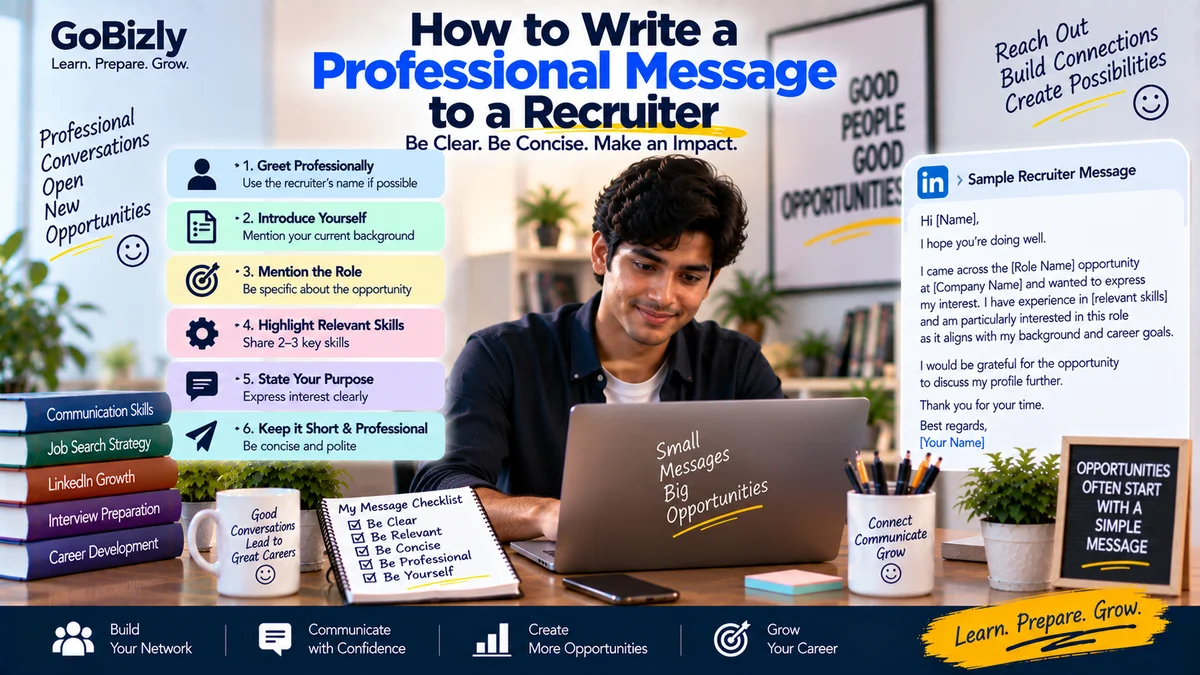
14. Communicate With Recruiters Professionally
When contacting recruiters, keep your message short.
Mention:
Your current background
Target role
Relevant skills
Why you're contacting them
Avoid sending your entire career history in the first message.
15. Follow Up Appropriately
If you've already applied or interviewed, a concise follow-up can be appropriate.
Keep the message professional.
Avoid repeated messages every day.
16. Keep Improving Your Skills
If your target roles repeatedly mention a skill you don't have, consider learning it.
For example:
Target role: Data Analyst
Recurring skill: Excel + SQL
Action: Build practical projects using both.
This turns your job search into a feedback loop.
17. Review Rejection Patterns
If you're applying consistently but rarely receiving interviews, review your process.
Look at:
Role relevance
Resume
Skills
Application quality
Interview performance
Don't assume one reason without evidence.
Use the pattern as a signal to investigate.
18. Don't Ignore Smaller Opportunities
Depending on your career stage, useful opportunities may include:
Internships
Contract roles
Apprenticeships
Trainee positions
Associate roles
Project-based opportunities
Evaluate them based on the actual role, learning opportunities and conditions.
19. Be Careful With Job Scams
Be cautious about opportunities that:
Ask for money to secure employment
Promise guaranteed jobs
Request unnecessary sensitive information
Use suspicious domains or communication channels
Pressure you to make immediate payments
Verify the employer and opportunity independently.
20. Measure Your Job Search
At the end of each week, review:
Applications submitted
Responses
Assessments
Interviews
Follow-ups
Skills improved
This helps you identify where your process may need adjustment.
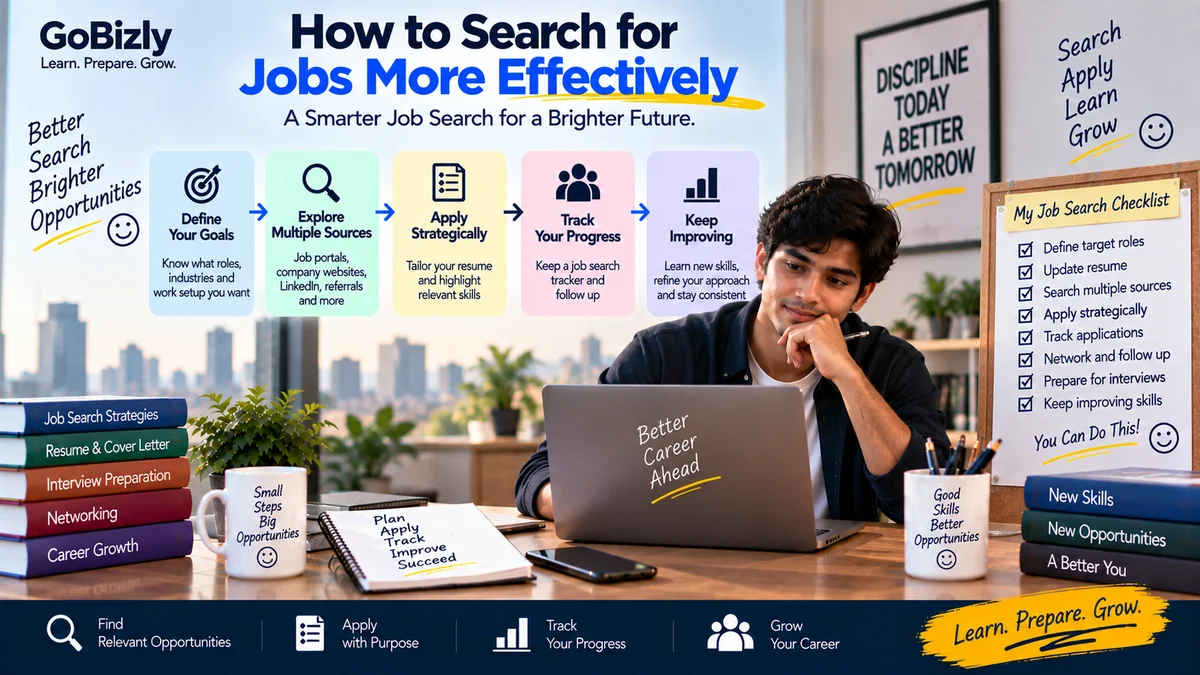
Job Search Checklist
☐ Define target roles
☐ Identify target industries
☐ Review required skills
☐ Search multiple sources
☐ Check company career pages
☐ Use specific keywords
☐ Read full job descriptions
☐ Tailor resumes
☐ Track applications
☐ Network professionally
☐ Follow up appropriately
☐ Prepare for interviews
☐ Review search results
☐ Watch for scams
Conclusion
A structured job search is easier to manage than randomly applying to every opening you find.
Define your target.
Search systematically.
Evaluate opportunities.
Tailor your applications.
Track your progress.
Learn from patterns.
Continue developing relevant skills.
Your job search becomes more useful when every application also teaches you something about your career direction.
Search with purpose. Apply with relevance. Learn from the process.
Learn. Prepare. Grow.