How to Prepare for Your First Internship
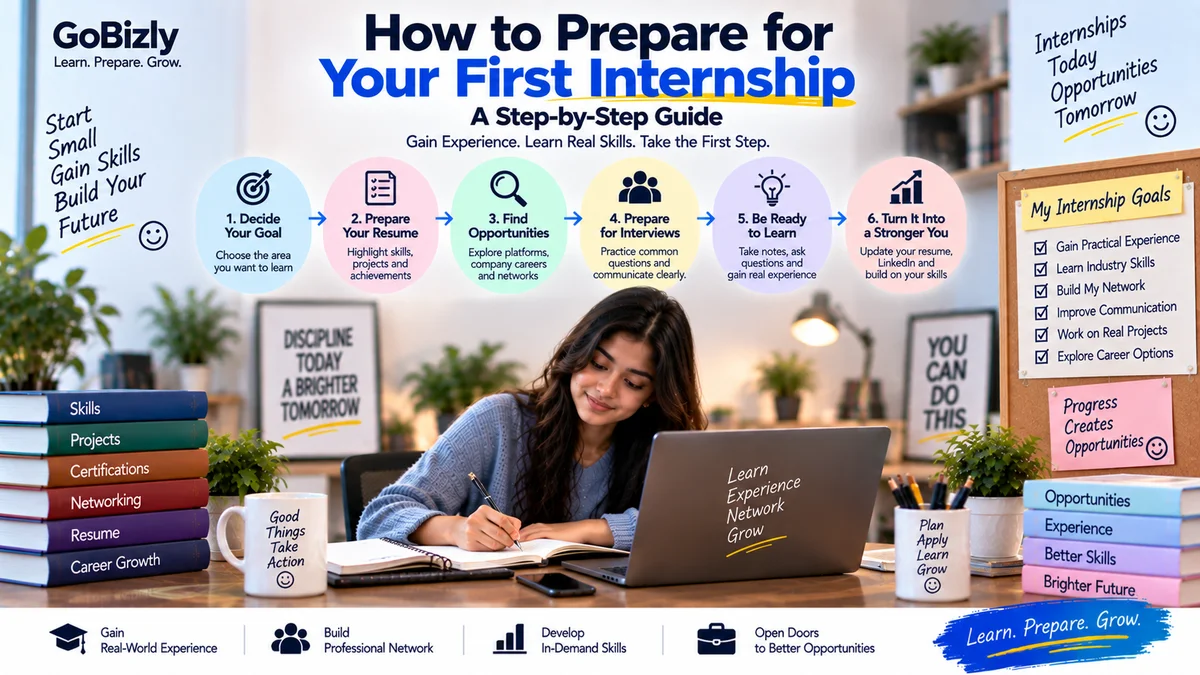
How to Prepare for Your First Internship
An internship can give students an opportunity to experience a professional environment before graduating.
It can help you understand:
How workplaces operate
How teams collaborate
How professional communication works
How projects are managed
What skills employers expect
Finding your first internship can also feel challenging because you may not have previous professional experience.
The key is to start preparing before you apply.
1. Decide What You Want to Learn
Don't choose an internship only because the company name sounds impressive.
Think about what you want to learn.
For example:
Marketing
Finance
Data analysis
Software development
Human resources
Sales
Operations
Design
A clear direction makes searching easier.
2. Understand the Role
Read the internship description carefully.
Look for:
Responsibilities
Skills
Tools
Educational requirements
Duration
Location
Working arrangement
Identify what the organization expects from interns.
3. Prepare Your Resume
Your resume can include:
Education
Skills
Projects
Certifications
Relevant coursework
Achievements
College activities
You don't need previous employment to create a useful internship resume.
4. Build a Basic LinkedIn Profile
Your LinkedIn profile can include:
Professional photo
Headline
Education
Skills
Projects
Certifications
About section
Keep the information accurate and professional.
5. Build One or Two Relevant Projects
If you don't have experience, projects can demonstrate initiative.
Choose projects related to your target internship.
For example:
Marketing internship: Create a mock marketing campaign.
Data internship: Build a simple dashboard.
Software internship: Build a small application.
Finance internship: Create a basic financial analysis.
6. Search for Internships
Possible sources include:
College placement cells
Company career pages
Professional networking platforms
Internship platforms
Faculty networks
Alumni networks
Industry communities
Check opportunities regularly.
7. Research the Organization
Before applying, understand:
What the organization does
Its products or services
Industry
Internship role
Basic company information
This can also help during interviews.
8. Tailor Your Application
Don't send exactly the same application everywhere.
Highlight experiences and skills relevant to the internship.
For example, if the role emphasizes Excel, highlight your Excel project or relevant coursework if you have genuine experience with it.
9. Write a Simple Application Message
Your message can include:
Introduction
Who you are.
Interest
Why you're interested in the internship.
Relevant background
Your education, skills or project.
Closing
Express your interest in discussing the opportunity.
Keep it concise.
10. Prepare for Internship Interviews
Common questions include:
Tell me about yourself.
Why are you interested in this internship?
What do you know about our organization?
What are your strengths?
What have you learned through your projects?
Tell me about a challenge you faced.
What do you want to learn?
Prepare examples rather than memorizing complete answers.
11. Know Your Projects
If you mention a project, expect questions about it.
Be ready to explain:
Objective
Process
Tools
Your contribution
Challenges
Results
Lessons learned
Don't add projects to your resume that you cannot explain.
12. Practice Communication
Internship interviews may assess how clearly you communicate.
Practice:
Self-introduction
Explaining projects
Answering questions
Asking questions
Speaking clearly
You don't need perfect English.
Focus on being understandable and organized.
13. Prepare Questions for the Interviewer
At the end of an interview, you may be asked:
"Do you have any questions for us?"
Useful questions could include:
What would an intern typically work on?
What skills would help me succeed in this role?
How is internship performance evaluated?
What would the first few weeks look like?
Choose questions that genuinely matter to you.
14. Understand What You Want to Learn
Before starting, define a few learning objectives.
For example:
I want to learn how campaign reporting works.
I want to understand how software teams manage projects.
I want to improve professional communication.
This gives you something specific to focus on.
15. Learn Workplace Basics
Your first internship may introduce you to:
Professional emails
Meetings
Documentation
Deadlines
Team communication
Task management
Feedback
Observe how your team works.
16. Take Notes
Keep notes about:
Processes
Tools
Instructions
New terminology
Questions
Feedback
You won't remember everything from your first few days.
Good notes can help you learn faster.
17. Ask Questions Thoughtfully
Don't remain stuck because you're afraid to ask.
First try to understand the issue yourself.
Then ask a specific question.
For example:
"I've completed the first two steps, but I'm unclear about how the final report should be formatted. Could you clarify the expected format?"
This shows that you've already attempted the task.
18. Ask for Feedback
Don't wait until the internship ends.
Ask periodically:
"Is there anything I should improve in the way I'm handling these tasks?"
Specific feedback can help you improve while you still have time to apply it.
19. Keep Track of Your Work
Maintain a simple record of:
Projects
Tasks
Tools used
Skills learned
Contributions
Feedback
This can help later when updating your resume.
20. Turn the Internship Into Career Evidence
After completing the internship, update your:
Resume
Add responsibilities and achievements.
Add the internship experience.
Portfolio
Add appropriate projects or case studies.
Interview preparation
Prepare examples based on what you actually experienced.
Don't exaggerate your role.
First Internship Checklist
☐ Choose a career area
☐ Understand the role
☐ Prepare resume
☐ Create LinkedIn profile
☐ Build relevant projects
☐ Search regularly
☐ Research organizations
☐ Tailor applications
☐ Prepare interview answers
☐ Practice communication
☐ Prepare questions
☐ Take notes
☐ Ask for feedback
☐ Track your work
☐ Update your resume afterward
Conclusion
Your first internship doesn't need to be perfect.
The goal is to gain exposure, develop practical skills and understand how professional environments work.
Prepare before applying.
Choose opportunities aligned with what you want to learn.
Be honest about what you know.
Ask thoughtful questions.
Take notes.
Seek feedback.
And keep evidence of the work you complete.
Your first internship can become an important step between college learning and professional experience.
Learn from the experience. Build practical skills. Carry the lessons forward.
Learn. Prepare. Grow.