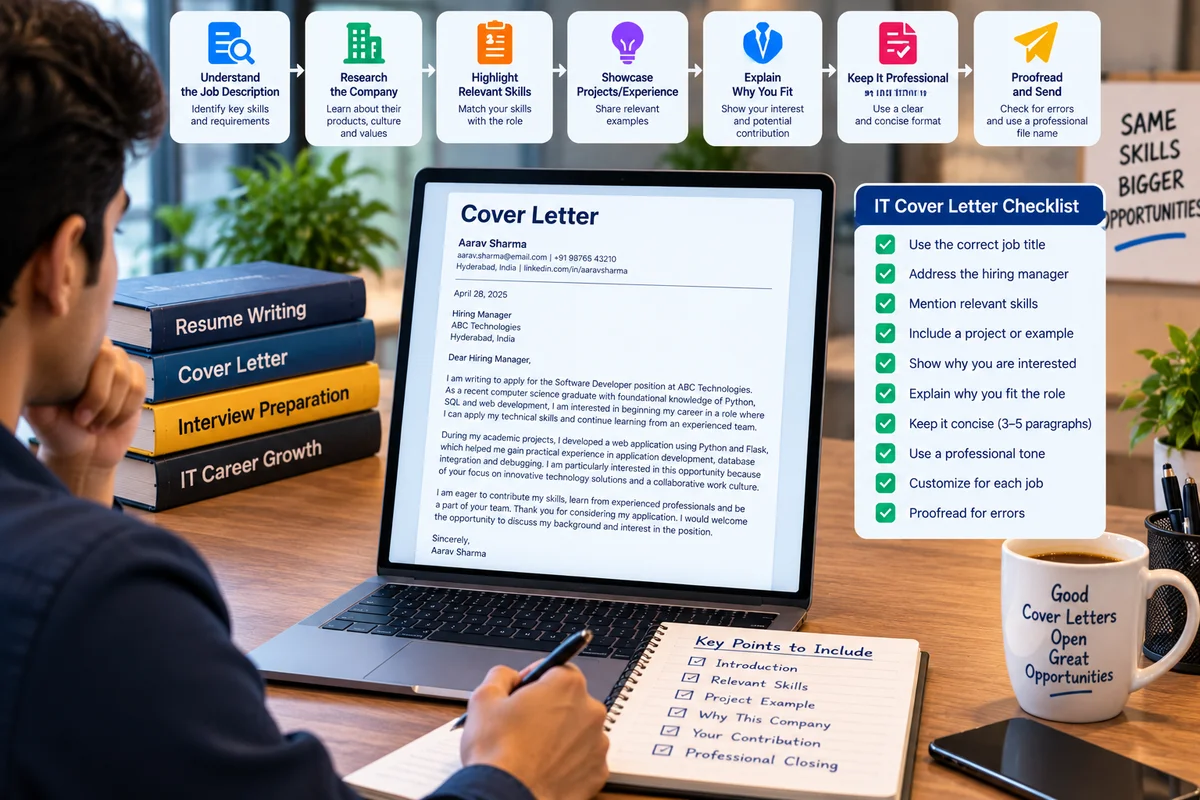
How to Highlight Your Skills and Experience on a Resume
# How to Highlight Your Skills and Experience on a Resume
Your skills and experience are among the most important parts of your resume.
However, many job seekers make the mistake of treating these sections as simple lists.
They add a long list of skills such as communication, teamwork, leadership, Microsoft Excel, problem-solving, digital marketing, project management, or data analysis. Then they list their previous jobs with basic responsibilities.
The problem is that a recruiter does not simply want to know what skills you claim to have.
They want to understand how you have used those skills.
For example:
“I have communication skills.”
is much weaker than:
“Coordinated with clients, internal teams, and external partners to resolve campaign issues and meet delivery timelines.”
The second statement provides context. It shows the skill being used in a real situation.
A strong resume therefore connects three things:
Skill → Experience → Evidence
This guide explains how to highlight your skills and experience effectively so your resume becomes more relevant, specific, and useful to employers.
---
## 1. Why Skills and Experience Matter on a Resume
Recruiters often review many applications for a single position.
They need to quickly determine whether a candidate appears relevant to the role.
Your resume should therefore answer three basic questions:
1. What can you do?
2. Where have you used those abilities?
3. What value did you create?
Your skills answer the first question.
Your experience helps answer the second.
Your achievements and examples help answer the third.
For example, imagine a candidate applying for a digital marketing position.
A weak resume might say:
Skills:
- Digital marketing
- Google Ads
- Analytics
- Communication
- Teamwork
Experience:
- Worked on digital marketing campaigns.
- Managed clients.
- Prepared reports.
A stronger version could say:
Skills:
- Google Ads
- Campaign optimization
- Performance reporting
- Google Analytics
- Client communication
Experience:
- Managed paid search campaigns across multiple client accounts and monitored performance against campaign objectives.
- Analyzed campaign performance and identified optimization opportunities based on key metrics.
- Prepared performance reports and communicated campaign insights to internal stakeholders and clients.
The second version gives the recruiter much more useful information.
---
# 2. Skills and Experience Are Not the Same Thing
Before improving your resume, understand the difference between skills and experience.
## Skills
Skills are capabilities that allow you to perform tasks effectively.
Examples include:
- Data analysis
- Communication
- Excel
- Google Ads
- SQL
- Project management
- Writing
- Presentation
- Negotiation
- Leadership
- Problem-solving
## Experience
Experience refers to the situations where you have applied those skills.
Experience can come from:
- Full-time employment
- Part-time employment
- Internships
- Freelance projects
- Contract work
- Volunteer work
- Academic projects
- Personal projects
- Business activities
- Leadership responsibilities
A person may have a skill without professional experience.
For example, a student may have learned Python and completed several projects but may not have worked as a software developer.
That does not mean Python should be excluded.
Instead, the resume should clearly distinguish between learned skills and professional experience.
---
# 3. Start With the Job You Want
One of the biggest mistakes job seekers make is creating one generic resume and sending it everywhere.
Different jobs require different combinations of skills.
For example, a marketing manager position might prioritize:
- Campaign management
- Performance analysis
- Budget management
- Team leadership
- Client management
A data analyst position might prioritize:
- SQL
- Excel
- Data visualization
- Statistics
- Business analysis
A customer-support position might prioritize:
- Communication
- Customer service
- Problem-solving
- CRM systems
- Conflict resolution
Your resume should therefore begin with the target role.
Ask yourself:
“What type of job am I applying for?”
Then identify the capabilities that matter most for that role.
---
# 4. Read the Job Description Carefully
The job description is one of the best sources for understanding what an employer expects.
Look for:
- Required skills
- Preferred skills
- Software and tools
- Years of experience
- Responsibilities
- Certifications
- Industry knowledge
- Communication requirements
- Leadership expectations
- Educational requirements
For example, a job description might say:
“Experience managing paid media campaigns, analyzing campaign performance, working with Google Ads, and preparing client reports.”
Important keywords include:
- Paid media
- Campaign management
- Performance analysis
- Google Ads
- Client reporting
If you genuinely have those skills and experience, make sure they are clearly visible in your resume.
---
# 5. Separate Hard Skills and Soft Skills
Skills can broadly be divided into hard skills and soft skills.
## Hard Skills
Hard skills are technical or job-specific capabilities.
Examples:
- Google Ads
- SQL
- Python
- Excel
- Adobe Photoshop
- Search engine optimization
- Data analysis
- Financial modeling
- Accounting
- Programming
- CRM management
- Project management software
These skills can often be learned, tested, or demonstrated through specific tasks.
## Soft Skills
Soft skills relate to how you work and interact with others.
Examples:
- Communication
- Leadership
- Teamwork
- Adaptability
- Problem-solving
- Time management
- Collaboration
- Decision-making
- Negotiation
- Critical thinking
Soft skills are important, but simply listing them is usually not very convincing.
Instead, demonstrate them through your experience.
---
# 6. Don't Create an Extremely Long Skills List
A common mistake is adding every skill you have ever encountered.
For example:
- Communication
- Leadership
- Teamwork
- Microsoft Word
- Microsoft Excel
- PowerPoint
- Internet
- Problem-solving
- Time management
- Creativity
- Adaptability
- Hardworking
- Positive attitude
- Multitasking
- Quick learner
A list like this does not necessarily make the resume stronger.
Instead, prioritize skills that are:
1. Relevant to the target job
2. Supported by your experience
3. Important in the job description
4. Current and useful
5. Specific enough to be meaningful
Quality is generally more useful than quantity.
---
# 7. Use Specific Skills Instead of Generic Terms
Whenever possible, replace vague skills with specific capabilities.
Instead of:
“Marketing”
consider:
“Paid Search Campaign Management”
Instead of:
“Analytics”
consider:
“Google Analytics Reporting and Performance Analysis”
Instead of:
“Computer Skills”
consider:
“Microsoft Excel, PivotTables, XLOOKUP, and Data Analysis”
Instead of:
“Social Media”
consider:
“Social Media Content Planning and Performance Reporting”
Specific skills communicate more information.
---
# 8. Match Your Skills With Your Experience
This is one of the most important principles of resume writing.
Your skills section should not feel disconnected from your experience section.
Suppose your skills section says:
- Project Management
- Team Leadership
- Client Communication
- Budget Management
Your experience section should ideally contain evidence that you have actually used those capabilities.
For example:
“Led a five-member project team, coordinated project timelines, managed stakeholder communication, and monitored project delivery against budget.”
Now the skills have evidence behind them.
---
# 9. How to Write Better Experience Bullet Points
Your experience section should focus on what you did, how you did it, and where possible, what happened as a result.
A useful structure is:
Action + Task + Context + Result
For example:
“Managed Google Ads campaigns across multiple accounts, monitored performance metrics, and optimized bids and targeting to improve campaign efficiency.”
This is stronger than:
“Responsible for Google Ads campaigns.”
The second sentence only states responsibility.
The first explains the work.
---
# 10. Start Bullet Points With Strong Action Verbs
Action verbs make experience statements more direct.
Useful examples include:
- Managed
- Led
- Developed
- Created
- Analyzed
- Improved
- Optimized
- Coordinated
- Implemented
- Delivered
- Designed
- Built
- Launched
- Executed
- Monitored
- Evaluated
- Reduced
- Increased
- Streamlined
- Supported
Instead of:
“Was responsible for preparing reports.”
Write:
“Prepared weekly performance reports for internal stakeholders and clients.”
Instead of:
“Worked on campaigns.”
Write:
“Managed campaign setup, monitoring, optimization, and performance reporting.”
---
# 11. Show Results Whenever Possible
Responsibilities explain what you did.
Achievements explain the value of what you did.
Compare:
“Managed email marketing campaigns.”
with:
“Managed email marketing campaigns and improved click-through performance through audience segmentation and content testing.”
The second statement gives the recruiter more context.
Whenever possible, use measurable information such as:
- Percentage improvement
- Revenue
- Cost savings
- Number of campaigns
- Number of clients
- Team size
- Budget
- Conversion volume
- Time saved
- Projects completed
- Customer growth
For example:
“Managed campaigns with monthly advertising budgets exceeding ₹10 lakh.”
or:
“Reduced manual reporting time by approximately 30% by creating a standardized reporting process.”
Only include numbers that are accurate.
Never invent achievements just to make a resume look stronger.
---
# 12. Use the STAR Method to Find Strong Resume Examples
The STAR framework can help you identify useful experience.
STAR stands for:
Situation
Task
Action
Result
You don't need to write all four sections explicitly on your resume.
Instead, use them to think about your experience.
For example:
Situation:
A campaign was underperforming.
Task:
Improve campaign performance.
Action:
Analyzed targeting, creative performance, bidding, and audience settings.
Result:
Improved campaign efficiency.
Resume version:
“Analyzed campaign targeting, creative performance, and bidding strategy to identify optimization opportunities and improve campaign efficiency.”
---
# 13. Don't Confuse Responsibilities With Achievements
Responsibilities describe what your role required.
Achievements describe what you accomplished.
Responsibility:
“Handled client reporting.”
Achievement:
“Created standardized client reporting workflows that improved consistency and reduced manual reporting effort.”
Both can be useful, but achievements usually provide stronger evidence of value.
A good experience section can include both responsibilities and measurable accomplishments.
---
# 14. How to Present Technical Skills
Technical skills should be organized clearly.
Instead of writing:
“Good knowledge of computers and software.”
Use categories.
Example:
Technical Skills
- Advertising Platforms: Google Ads, DV360
- Analytics: Google Analytics
- Ad Operations: Campaign trafficking, QA, reporting
- Office Tools: Excel, PowerPoint
- Marketing Platforms: HubSpot
This makes the information easier to scan.
---
# 15. How to Present Soft Skills
Soft skills are better demonstrated through experience than through a large standalone list.
For example, instead of simply writing:
“Leadership”
show it through:
“Led a cross-functional team to coordinate campaign delivery and resolve operational issues.”
Instead of:
“Communication”
show:
“Presented campaign performance insights to clients and translated data into actionable recommendations.”
Instead of:
“Problem-solving”
show:
“Investigated campaign delivery issues by reviewing targeting, creative, bidding, pacing, and tracking configurations.”
Evidence is more persuasive than claims.
---
# 16. What Students and Freshers Should Do
Freshers often worry because they don't have years of professional experience.
However, experience doesn't only mean full-time employment.
You can use:
- Academic projects
- Internships
- Freelance work
- College activities
- Volunteer projects
- Competitions
- Personal projects
- Certifications
- Student organizations
- Leadership roles
For example:
Project: E-commerce Sales Analysis
- Analyzed a sample sales dataset using Excel.
- Identified monthly sales trends and top-performing categories.
- Created charts and summarized findings in a presentation.
This demonstrates analytical ability even without formal employment.
---
# 17. How Career Changers Should Present Skills
Career changers often have transferable skills.
For example, someone moving from sales to digital marketing may already have:
- Client communication
- Negotiation
- Relationship management
- Presentation
- Target management
- Customer understanding
These skills can remain valuable in the new career.
The key is to connect them with the requirements of the target role.
For example:
“Managed client relationships and communicated business requirements across multiple accounts.”
This can support applications for roles involving account management, customer success, marketing, or business development.
---
# 18. How Experienced Professionals Should Present Skills
Experienced professionals generally don't need to list every skill they have accumulated throughout their career.
Instead, focus on the capabilities most relevant to the position you want next.
A senior professional might prioritize:
- Strategic planning
- Team leadership
- Budget management
- Stakeholder management
- Business analysis
- Process improvement
- Client management
The more senior the role, the more important it becomes to demonstrate:
- Scope
- Ownership
- Decision-making
- Leadership
- Business impact
---
# 19. Tailor Your Skills for Every Application
You don't necessarily need to rewrite your entire resume for every job.
Instead, maintain a master list of your skills and experiences.
Then select the most relevant items for each application.
For example:
Master Skills:
- Google Ads
- DV360
- Campaign Management
- SEO
- Analytics
- Reporting
- Client Management
- Team Leadership
- Budget Management
For a programmatic advertising role, emphasize:
- DV360
- Campaign Management
- Ad Operations
- Optimization
- Reporting
- Pacing
- Troubleshooting
For a broader digital marketing role, emphasize:
- Google Ads
- Analytics
- SEO
- Campaign Management
- Reporting
- Content
- Performance Marketing
The underlying experience stays the same, but the positioning changes.
---
# 20. Use Keywords Naturally
Many companies use Applicant Tracking Systems (ATS) to organize and filter applications.
Relevant keywords can therefore help your resume match the requirements of a position.
If a job description specifically asks for:
“Google Analytics”
and you genuinely have that experience, use the term “Google Analytics” rather than replacing it with a vague phrase such as “website analytics.”
However, keyword optimization should never mean stuffing your resume with unrelated terms.
Only include skills you genuinely possess.
---
# 21. Don't Claim Skills You Cannot Defend
This is especially important for technical skills.
If you list:
“Advanced SQL”
you should be comfortable answering SQL questions during an interview.
If you list:
“Expert Google Ads”
you should be able to explain campaign structure, bidding, targeting, measurement, optimization, and troubleshooting.
A resume creates expectations.
Every significant skill you list can become an interview question.
Therefore:
Only list skills you can explain.
---
# 22. Use Skill Levels Carefully
Some resumes use labels such as:
- Beginner
- Intermediate
- Advanced
- Expert
These can be useful in certain situations, but they can also be subjective.
For technical skills, evidence is often more valuable than a self-assigned rating.
Instead of:
“Excel — Expert”
consider:
“Excel — PivotTables, XLOOKUP, data cleaning, reporting”
This tells the recruiter what you can actually do.
---
# 23. Avoid Skill Bars and Graphic Ratings
Some resumes use visual bars such as:
Excel ██████████ 90%
Communication ████████ 80%
Leadership ███████ 70%
These ratings are difficult to interpret and can sometimes create ATS compatibility issues.
A simple text-based skills section is generally safer and clearer.
---
# 24. Keep Your Experience Section Easy to Scan
A good experience entry normally contains:
Job Title
Company Name
Location
Employment Dates
Then:
- Strong bullet point
- Strong bullet point
- Strong bullet point
- Strong bullet point
For example:
Digital Marketing Specialist
ABC Company | Hyderabad
2022–2025
- Managed paid media campaigns across multiple client accounts.
- Monitored campaign performance and identified optimization opportunities.
- Prepared weekly and monthly performance reports.
- Coordinated with internal teams to resolve campaign delivery issues.
The structure is simple and easy to scan.
---
# 25. Don't Write Large Paragraphs for Work Experience
Recruiters usually don't want to read a large block of text describing your entire job.
Avoid:
“I was responsible for managing multiple campaigns and working with clients while also preparing reports and coordinating with internal teams and making sure campaigns were delivered properly…”
Break the information into bullets.
This makes important details easier to find.
---
# 26. Connect Tools With Tasks
Listing tools alone isn't enough.
For example:
“Google Analytics, Excel, Google Ads”
doesn't tell the recruiter how you used them.
Instead:
- Used Google Ads to manage and optimize paid search campaigns.
- Used Google Analytics to analyze website performance and user behavior.
- Used Excel to prepare campaign reports and analyze performance data.
This provides context.
---
# 27. Don't List Every Software Tool You Have Used Once
A resume is not a complete inventory of your professional history.
If you opened a tool once several years ago, it probably doesn't need to appear in your skills section.
Prioritize tools that are:
- Relevant
- Current
- Frequently used
- Requested by employers
- Important to your target role
---
# 28. Make Older Experience More Concise
If you have many years of experience, older roles generally don't need the same level of detail as your most recent positions.
Your recent experience should receive more attention.
For example:
Recent Role:
4–6 detailed bullets
Previous Role:
3–5 bullets
Older Role:
2–3 relevant bullets
This helps keep the resume focused.
---
# 29. What to Do With Career Gaps
A career gap does not mean you have no skills.
If you spent time learning, completing courses, working on projects, freelancing, volunteering, or developing professional knowledge, those activities can sometimes be included where relevant.
The goal is not to hide the gap.
The goal is to present your current capabilities honestly and professionally.
For example:
Professional Development
- Completed training in digital marketing and analytics.
- Practiced campaign setup and performance analysis.
- Built practical projects to refresh industry knowledge.
Only include activities that actually happened.
---
# 30. Skills From Certifications
Certifications can support your skills, but the certification itself is not proof of deep practical experience.
For example:
Certification:
Google Analytics Certification
Skills:
Google Analytics reporting, measurement concepts, event analysis
If you have actually applied the knowledge through work or projects, explain that in your experience or project section.
---
# 31. Create a Master Skills Inventory
A useful career exercise is to create a master list of everything you can do.
Divide it into categories.
### Technical Skills
- Software
- Platforms
- Programming languages
- Analytics tools
- Marketing tools
### Functional Skills
- Campaign management
- Reporting
- Project management
- Research
- Analysis
### Business Skills
- Client management
- Budget management
- Planning
- Negotiation
### Soft Skills
- Communication
- Leadership
- Collaboration
- Problem-solving
Then select the most relevant skills when applying for a particular role.
---
# 32. Review Your Skills Every Few Months
Your professional skills change over time.
You may:
- Learn a new tool
- Complete a certification
- Work on a new project
- Take on leadership responsibilities
- Develop industry expertise
Update your resume periodically rather than waiting until you urgently need a job.
This makes future applications much easier.
---
# 33. Common Resume Skills Mistakes
Avoid these common problems.
### Mistake 1: Listing too many skills
A long list can make your resume unfocused.
### Mistake 2: Using vague skills
“Computer knowledge” provides little information.
### Mistake 3: Listing skills without evidence
Claims are stronger when supported by experience.
### Mistake 4: Copying the job description
Don't simply copy every keyword.
Use relevant keywords honestly.
### Mistake 5: Claiming expert-level knowledge
Only use advanced or expert descriptions when you can defend them.
### Mistake 6: Ignoring transferable skills
Skills developed in another career can still be valuable.
### Mistake 7: Writing responsibilities without results
Whenever possible, explain the outcome or impact.
### Mistake 8: Using identical resumes for every job
Different roles require different priorities.
---
# 34. Before and After Example
### Weak Version
Skills:
- Marketing
- Communication
- Excel
- Teamwork
- Google Ads
Experience:
Digital Marketing Executive
ABC Company
- Worked on campaigns.
- Prepared reports.
- Talked to clients.
- Used Excel.
- Worked with the team.
### Stronger Version
Skills:
- Google Ads campaign management
- Campaign performance analysis
- Excel reporting and data analysis
- Client communication
- Campaign optimization
Experience:
Digital Marketing Executive
ABC Company
- Managed Google Ads campaigns and monitored performance against campaign objectives.
- Analyzed campaign metrics to identify optimization opportunities.
- Prepared weekly performance reports using Excel.
- Communicated campaign performance and recommendations to clients.
- Coordinated with internal teams to resolve campaign delivery and tracking issues.
The second version gives much more evidence about the candidate's capabilities.
---
# 35. A Simple Formula for Strong Experience Bullets
When you are struggling to write an experience bullet, use this formula:
Action + What + How + Result
For example:
“Analyzed campaign performance using platform data and reporting tools to identify optimization opportunities and improve campaign efficiency.”
You don't need to use the formula mechanically for every bullet, but it can help you move beyond basic responsibility statements.
---
# 36. Resume Skills Checklist
Before submitting your resume, ask:
### Relevance
- Are my skills relevant to the job?
- Did I prioritize the most important capabilities?
- Did I review the job description?
### Evidence
- Have I demonstrated important skills through experience?
- Did I include projects where professional experience is limited?
- Can I explain every important skill during an interview?
### Clarity
- Are the skills easy to find?
- Are my experience bullets concise?
- Did I use strong action verbs?
### Accuracy
- Are all claims truthful?
- Are my skill levels realistic?
- Are dates and job titles accurate?
### Results
- Did I include measurable achievements where possible?
- Did I explain the impact of important work?
### ATS
- Did I use relevant keywords naturally?
- Is the formatting simple enough to be read correctly?
- Did I avoid unnecessary graphics and complicated layouts?
---
# 37. How to Prepare for Interview Questions From Your Resume
Remember that your resume is often the starting point for an interview.
If you list:
“Team leadership”
you may be asked:
“Tell me about a time you led a team.”
If you list:
“Campaign optimization”
you may be asked:
“How did you optimize your campaigns?”
If you list:
“Excel”
you may be asked:
“What Excel functions do you commonly use?”
If you list:
“Client management”
you may be asked:
“How did you handle a difficult client?”
Therefore, review your resume before every interview.
For each major skill, prepare at least one real example.
---
# 38. Your Resume Should Tell a Consistent Story
Your summary, skills, experience, projects, and education should support one another.
For example:
Professional Summary:
Digital marketing professional with experience in campaign management and performance analysis.
Skills:
Google Ads, campaign optimization, analytics, reporting.
Experience:
Managed campaigns and analyzed performance.
Projects:
Built a campaign performance dashboard.
These sections reinforce the same professional direction.
A recruiter can quickly understand the candidate's profile.
---
# 39. Don't Try to Impress With Complexity
A strong resume doesn't need complicated language.
Clear writing is usually better.
Instead of:
“Leveraged synergistic cross-functional capabilities to facilitate optimization of multifaceted campaign ecosystems…”
Write:
“Worked with cross-functional teams to optimize campaign performance.”
Simple writing communicates more effectively.
---
# 40. Final Takeaway
Your skills section tells employers what you can do.
Your experience section shows where you have applied those capabilities.
Your achievements demonstrate the value you created.
The strongest resumes connect all three.
Instead of simply writing:
“I have strong communication skills.”
show it.
Instead of writing:
“I have leadership skills.”
demonstrate it.
Instead of listing:
“Google Ads.”
explain how you used it.
Instead of saying:
“Good analytical skills.”
show the analysis you performed.
A useful way to think about your resume is:
Don't just list what you know.
Show what you can do.
And whenever possible, show what happened because you did it.
---
# Frequently Asked Questions
## How many skills should I include on my resume?
There is no universal number. Focus on the skills most relevant to the position. A concise, targeted list is generally more useful than an extremely long list.
## Should I include soft skills on my resume?
Yes, but demonstrate important soft skills through your experience whenever possible. A specific example of leadership or communication is usually stronger than simply listing the word.
## Should I customize my skills for every job?
Yes. You should prioritize skills that are relevant to the specific position and supported by your actual experience.
## Should freshers include skills even without work experience?
Absolutely. Freshers can include technical skills, academic project skills, certifications, internships, personal projects, and transferable skills.
## Should I include every software tool I know?
No. Focus on tools that are relevant to your target position and that you can confidently discuss.
## What is more important: skills or experience?
They work together. Skills explain what you can do, while experience demonstrates how you have applied those skills.
## Should I include measurable achievements?
Yes, whenever you have genuine measurable results. Numbers can make accomplishments easier for recruiters to understand.
## What if I don't have measurable results?
You can still describe the scope and nature of your work. Don't invent numbers. Explain what you managed, created, analyzed, improved, or delivered.
## Can skills from a previous career be used when changing careers?
Yes. Many skills are transferable. Identify capabilities from your previous career that are relevant to your new target role and demonstrate how they apply.
## Should I use skill ratings such as 90% or 100%?
Usually, simple text descriptions are preferable. Self-rated percentages are subjective and don't provide much evidence of capability.
---
# Final Resume Review
Before sending your resume, remember this simple framework:
Relevant Skills
What capabilities does this job require?
↓
Relevant Experience
Where have you used those capabilities?
↓
Evidence
What did you actually do?
↓
Results
What changed, improved, or was delivered?
↓
Relevance
Why does this experience matter for the role you're applying for?
If your resume consistently follows this structure, your skills and experience become much more meaningful to recruiters.
Your goal is not to create the longest list of skills.
Your goal is to make it easy for an employer to understand what you can do, what you have done, and why you are relevant to the role.
That is what turns a basic resume into a stronger professional profile.