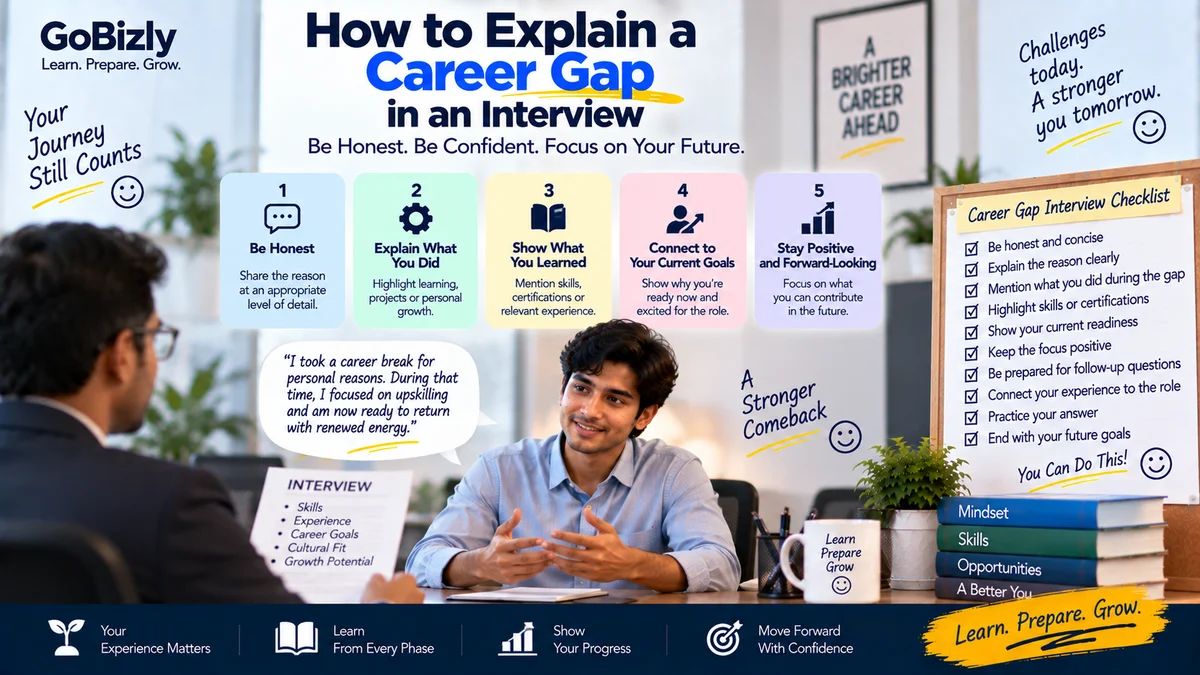
How to Explain a Career Gap in an Interview
How to Explain a Career Gap in an Interview
A career gap can sometimes become a difficult topic during a job interview.
You may worry about:
"What will the interviewer think?"
"Will they ask why I wasn't working?"
"How much should I explain?"
A useful approach is to be honest, concise and focused on the relevant facts.
You don't need to turn the explanation into a long personal story.
The objective is to explain the period clearly and then bring the conversation back to your current readiness for the role.
1. Understand What the Interviewer Is Trying to Learn
When an interviewer asks about a career gap, they may want to understand:
What you were doing during the period
Whether you're ready to return to work
Whether your skills remain relevant
What you've learned
Why you're interested in the current role
The exact reason for the question varies by interviewer.
2. Be Honest
Don't create a fictional explanation.
If you took time away for:
Family responsibilities
Education
Personal reasons
Career exploration
Skill development
Health-related circumstances
you can explain the situation at an appropriate level of detail.
You don't need to disclose private information that isn't necessary to explain your career history.
3. Keep the Explanation Concise
A career-gap explanation doesn't need to dominate the interview.
A useful structure is:
Reason → What you did → What you learned → Why you're ready now
For example:
"I took a career break for personal and family reasons. During that period, I also used the time to refresh my professional skills and prepare for my return to the workforce. I'm now ready to return to a full-time role and am particularly interested in opportunities related to my experience."
Customize this to your actual circumstances.
4. Explain What You Did During the Gap
If applicable, mention constructive activities such as:
Learning
Certifications
Projects
Freelance work
Volunteering
Family responsibilities
Career exploration
Professional training
Only mention activities that genuinely occurred.
5. Don't Over-Explain Personal Details
You can be honest without sharing every private detail.
For example:
Too detailed:
A long explanation covering every personal event during the period.
More focused:
"I took time away for family responsibilities. Once those responsibilities were settled, I focused on refreshing my professional skills and preparing to return to work."
The appropriate level of detail depends on your comfort and circumstances.
6. Connect the Gap to Your Current Direction
After explaining the gap, move toward your current career goals.
For example:
"Since returning to professional preparation, I've been focusing on digital marketing and programmatic advertising, including refreshing my knowledge of campaign platforms and analytics."
Use your real experience.
7. Show Recent Learning
If you've completed relevant learning during the gap, mention it.
Examples:
Certifications
Courses
Projects
Practical exercises
Industry research
Portfolio work
The goal is to demonstrate what you've been doing recently, not to hide the gap.
8. Be Prepared for Follow-Up Questions
An interviewer might ask:
Why did you decide to return now?
What did you learn during the break?
Are you ready for a full-time role?
Why this role?
Prepare concise answers.
9. Explain a Career Break Differently From a Short Employment Gap
A short gap between jobs may not require the same level of explanation as a long career break.
The longer the period, the more useful it may be to provide context about what you were doing during that time.
Always remain truthful.
10. Don't Apologize for the Gap
A career break is part of your career history.
You don't need to begin your explanation with:
"I'm sorry about my career gap."
Instead, state the facts calmly and move forward.
11. Avoid Blaming Others
If your previous employment ended because of difficult circumstances, explain the situation factually.
Avoid turning the interview answer into a complaint about:
Previous employers
Managers
Colleagues
Organizations
Keep the focus on your career journey.
12. Prepare a Short Version
Have a 20–30 second explanation ready.
For example:
"I took a career break for personal reasons. During that period, I eventually focused on refreshing my professional skills and preparing for my return to work. I'm now actively looking for opportunities where I can apply my previous experience and recent learning."
Again, adjust this to your actual circumstances.
13. Prepare a Longer Version
If the interviewer asks for more detail, expand only as much as necessary.
You can discuss:
Reason
Duration
Activities
Learning
Current readiness
Then return to the role you're interviewing for.
14. Focus on Current Skills
Your strongest response isn't necessarily the explanation of the past.
It is also what you can demonstrate today.
Be prepared to discuss:
Current skills
Recent projects
Certifications
Tools
Industry knowledge
Relevant experience
15. Update Your Resume
Depending on your situation, your resume can clearly show:
Organization — Role
Dates
Then your next professional period.
You can also include relevant learning or projects from the career break when appropriate.
Don't fabricate employment to fill the gap.
16. Prepare for Role-Specific Questions
If you're returning to the same field, expect questions about whether your knowledge is current.
Review:
Industry developments
Tools
Processes
Core concepts
Recent projects
If you're changing careers, be prepared to explain the connection between your previous experience and your new direction.
17. Practice Without Memorizing
Practice saying your explanation aloud.
You should sound natural rather than rehearsed.
Focus on remembering the structure:
Context → Activity → Learning → Current direction
18. Keep the Tone Forward-Looking
Once you've explained the gap, move the conversation toward:
What you've learned
What you can contribute
Why you're interested
What you're preparing for
The interview is about your current fit as well as your past timeline.
19. Example Career Gap Responses
Personal Reasons
"I took a career break for personal reasons. During that time, I handled those responsibilities and later focused on refreshing my professional skills. I'm now ready to return to a full-time role."
Education
"I took time away from employment to focus on further learning. During that period, I developed skills in [area] and completed [relevant learning]. I'm now looking to apply those skills professionally."
Career Transition
"I took a break while reassessing my career direction. During that period, I explored [field], built relevant skills and worked on practical learning. I'm now focused on opportunities in [target area]."
Use only the version that accurately reflects your situation.
20. Prepare Your Own Answer
Write down:
Why was there a gap?
What did I do during that period?
What did I learn?
What skills do I have today?
Why am I returning now?
Why am I interested in this role?
Then turn those answers into a concise response.
Career Gap Interview Checklist
☐ Be honest
☐ Keep the explanation concise
☐ Explain the relevant context
☐ Mention genuine activities during the gap
☐ Highlight recent learning
☐ Prepare follow-up answers
☐ Focus on current skills
☐ Practice naturally
☐ Avoid unnecessary personal details
☐ Don't fabricate experience
☐ Connect your background to the role
☐ End with your current career direction
Conclusion
A career gap is one part of your professional timeline.
When asked about it, focus on being honest, clear and relevant.
Explain the circumstances at a level you're comfortable sharing.
Talk about what you genuinely did during the period.
Then bring the conversation back to your current skills, preparation and career direction.
You don't need to hide your career history.
You need to be able to explain it clearly.
Explain the past honestly. Show what you've learned. Focus on where you're going next.
Learn. Prepare. Grow.