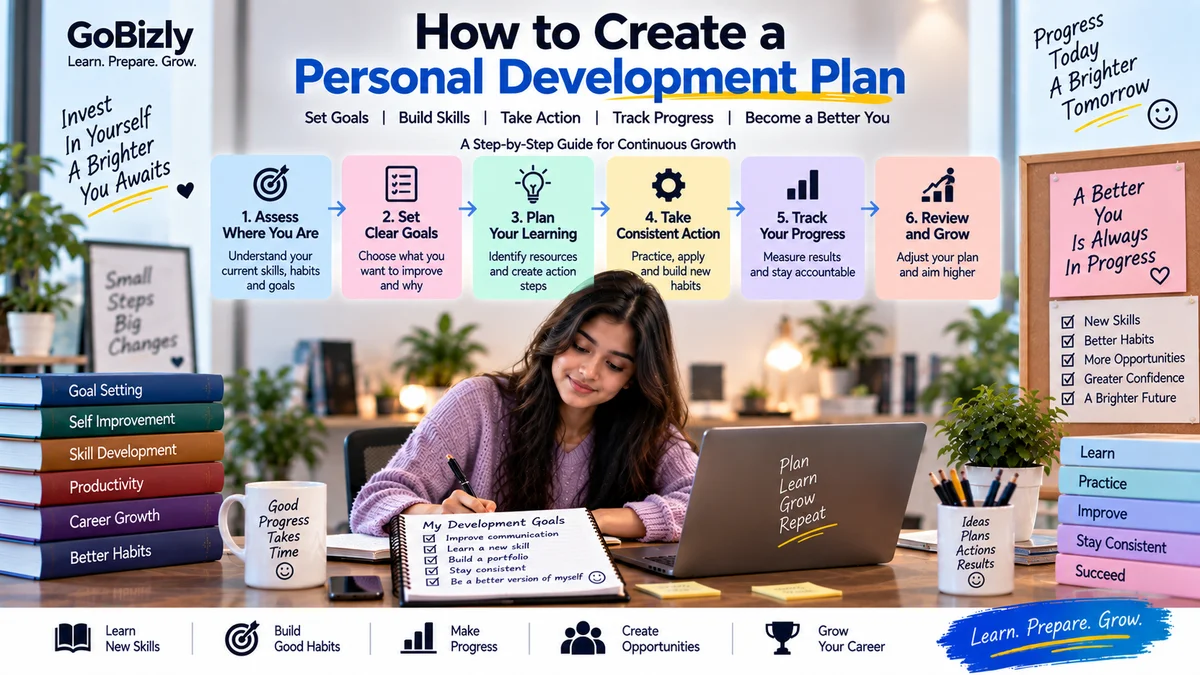
How to Create a Personal Development Plan
How to Create a Personal Development Plan
Personal development can easily become a collection of vague intentions.
You may want to:
Improve communication
Learn new skills
Become more organized
Build confidence
Advance your career
Improve productivity
But without a plan, these goals can remain ideas.
A personal development plan gives you a structured way to decide what you want to improve, why it matters and what you will do about it.
1. Understand Where You Are Today
Start with an honest assessment.
Review:
Skills
Knowledge
Habits
Communication
Productivity
Career progress
Strengths
Development areas
You don't need to judge yourself.
Simply establish your starting point.
2. Decide What You Want to Improve
Choose a few areas rather than trying to change everything simultaneously.
Examples:
Communication
Technical skills
Leadership
Time management
Public speaking
Professional writing
Problem solving
Industry knowledge
Choose areas that are meaningful to your current goals.
3. Define Why Each Goal Matters
A goal becomes easier to prioritize when you understand its purpose.
For example:
Goal: Improve presentation skills.
Why: I want to communicate project ideas more clearly at work.
The reason connects the development activity to a real outcome.
4. Set Clear Goals
Use specific outcomes.
Instead of:
"Improve communication."
Try:
"Deliver one five-minute presentation every two weeks for the next three months."
The second goal gives you something concrete to work toward.
5. Identify the Skills Behind the Goal
A goal may involve multiple skills.
For example:
Goal: Improve professional presentations.
You may need:
Structure
Speaking
Visual design
Storytelling
Time management
Question handling
Breaking the goal into skills makes it easier to plan.
6. Choose Learning Resources
Choose resources appropriate to the skill.
They may include:
Books
Articles
Courses
Videos
Practice exercises
Mentors
Workshops
Projects
AI learning tools
Don't collect resources indefinitely.
Choose a manageable set and start using them.
7. Build Practice Into the Plan
Learning without practice may not produce the result you want.
If your goal is communication:
Learn → Practice → Receive feedback → Improve → Repeat
If your goal is Excel:
Learn → Build → Test → Review → Repeat
Application should be part of the plan.
8. Create Milestones
Large goals become easier to track when broken into milestones.
For example:
Goal: Improve public speaking.
Month 1: Practice short explanations.
Month 2: Deliver five-minute presentations.
Month 3: Present to a small group.
Milestones make progress visible.
9. Track Your Progress
Use a simple table.
Goal | Action | Frequency | Progress |
|---|---|---|---|
Communication | Speaking practice | 2× weekly | 60% |
Excel | Practical exercises | 3× weekly | 70% |
Reading | Industry articles | Weekly | Active |
Your tracker doesn't need to be complicated.
10. Create a Weekly Routine
A development plan works better when it becomes part of your routine.
For example:
Monday: Learning
Wednesday: Practice
Friday: Practice
Sunday: Review
Choose a schedule that fits your actual life.
11. Use Feedback
Feedback can show you what you aren't noticing yourself.
Ask:
What am I doing well?
What should I improve?
What would make this stronger?
Use feedback to adjust your development plan.
12. Measure Outcomes
Don't measure only the number of hours you spent learning.
Look for evidence.
For example:
Instead of:
"I studied communication for 20 hours."
Ask:
"Can I now deliver a clearer five-minute presentation?"
Instead of:
"I completed an Excel course."
Ask:
"Can I build the required spreadsheet independently?"
Outcomes provide more useful evidence of development.
13. Review Your Plan Monthly
At the end of each month:
Completed
What did you achieve?
Progress
What improved?
Challenges
What prevented progress?
Next Step
What should you change?
This keeps the plan active.
14. Don't Overload Your Plan
A development plan containing 30 goals may look impressive but can become difficult to maintain.
Choose a small number of priorities.
For example:
1 career skill
1 professional skill
1 personal development area
You can add more after completing them.
15. Include Career Goals
Personal development and career development can overlap.
For example:
Career Goal: Move into an analytics role.
Development Goals:
Learn analytics fundamentals.
Improve Excel.
Build two projects.
Practice interview questions.
This connects personal development with professional direction.
16. Build Habits Around Your Goals
Some development areas require consistency.
Examples:
Reading: 20 minutes daily.
Communication: Speaking practice twice weekly.
Learning: One focused session daily.
Networking: One professional conversation each week.
Habits make progress less dependent on motivation.
17. Accept That Progress Won't Always Be Linear
Some weeks will be more productive than others.
You may have:
Work deadlines
Exams
Family responsibilities
Health needs
Travel
Unexpected events
If you fall behind, restart rather than abandoning the entire plan.
18. Update Your Plan as You Improve
Once a skill becomes stronger, move to the next level.
For example:
Beginner: Understand Excel formulas.
↓
Intermediate: Build reports.
↓
Advanced: Build complex dashboards.
Development is a continuous process.
19. Keep Evidence of Your Progress
Save examples of your work.
This could include:
Projects
Presentations
Certificates
Reports
Writing
Portfolio pieces
Feedback
Evidence can help you see how far you've progressed.
20. Build Your Personal Development Plan
Use this structure:
Goal
What do I want to improve?
Why
Why does it matter?
Current Level
Where am I today?
Target
Where do I want to reach?
Actions
What will I do?
Resources
What will I use?
Deadline
When will I review it?
Evidence
How will I know I've improved?
Example Personal Development Plan
Area | Current | Target | Action | Review |
|---|---|---|---|---|
Communication | Developing | Strong | Speaking practice | Monthly |
Excel | Intermediate | Advanced | Projects | 90 days |
Industry Knowledge | Basic | Intermediate | Weekly reading | Monthly |
Networking | Limited | Active | 1 connection/week | Monthly |
Common Personal Development Mistakes
Setting Too Many Goals
Focus on a manageable number.
Learning Without Practicing
Apply what you learn.
Measuring Time Instead of Outcomes
Look for evidence of improvement.
Never Reviewing the Plan
Regular reviews keep goals relevant.
Choosing Goals Based on Trends
Prioritize what matters to your situation.
Expecting Immediate Results
Skill development takes repeated practice.
Personal Development Checklist
☐ Assess your current skills
☐ Choose development priorities
☐ Define clear goals
☐ Understand why each goal matters
☐ Choose learning resources
☐ Create practice activities
☐ Set milestones
☐ Track progress
☐ Get feedback
☐ Review monthly
☐ Keep evidence of improvement
☐ Update your plan
Conclusion
Personal development doesn't require a complicated system.
Start with a few meaningful goals.
Understand where you are.
Define where you want to go.
Choose the skills you need.
Practice consistently.
Track your progress.
Review and adjust.
The purpose of a development plan isn't to create a perfect schedule.
It's to create a practical path for continuous improvement.
Know your direction. Build the skills. Track the progress. Keep growing.
Learn. Prepare. Grow.