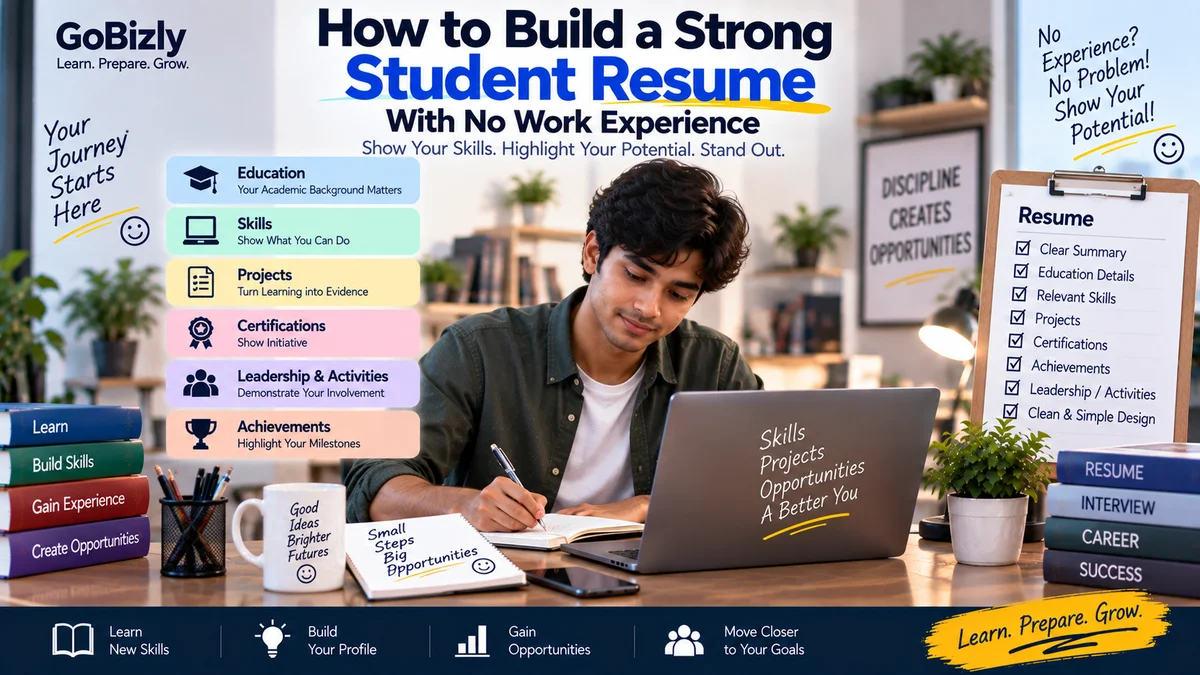
How to Build a Strong Student Resume With No Work Experience
How to Build a Strong Student Resume With No Work Experience
One of the biggest challenges students face when preparing for their first job is creating a resume without formal work experience.
You may look at job descriptions asking for experience and wonder:
"What can I put on my resume if I haven't worked yet?"
The answer is that a resume isn't only about employment history.
As a student, you can demonstrate your potential through:
Education
Projects
Internships
Certifications
Technical skills
Academic achievements
Leadership
Volunteering
Competitions
Relevant extracurricular activities
The goal is to present the experience and skills you already have in a clear and relevant way.
1. Start With a Clear Resume Structure
A student resume can include:
Name and contact information
Professional summary
Education
Skills
Projects
Internships
Certifications
Achievements
Leadership or extracurricular activities
You don't necessarily need every section.
Use the sections that genuinely strengthen your application.
2. Write a Short Professional Summary
Your summary should quickly explain:
Who you are
What you're studying
Your relevant skills
What type of opportunity you're seeking
For example:
"B.Com student with an interest in digital marketing, analytics and business operations, with hands-on experience through academic projects and online certifications. Seeking an entry-level opportunity to apply analytical and communication skills in a professional environment."
Keep it concise.
Avoid generic statements such as:
"I am a hardworking and passionate individual looking for a challenging opportunity."
Try to provide actual information instead.
3. Highlight Your Education
For students and freshers, education can be an important part of the resume.
Include:
Degree
College
University
Graduation year
Relevant coursework where useful
Academic achievements where relevant
For example:
Bachelor of Commerce
ABC College, Hyderabad
Expected Graduation: 2027
You don't need to list every subject you've studied.
Focus on relevant information.
4. Add Relevant Skills
Don't simply create a long list of every tool you've ever opened.
Separate skills into useful groups.
Technical Skills
Excel
Google Analytics
SQL
Canva
Marketing Skills
SEO
Google Ads
Social Media Marketing
Professional Skills
Communication
Presentation
Teamwork
Problem Solving
Only include skills you can genuinely discuss during an interview.
5. Use College Projects
Projects can provide valuable evidence of practical learning.
For example:
Digital Marketing Project
Created a mock digital marketing strategy for a local business.
Researched the target audience and competitors.
Developed a basic content and advertising plan.
Presented recommendations to the class.
This is stronger than simply writing:
"Completed a digital marketing project."
Explain what you actually did.
6. Use Internships
Even a short internship can provide useful experience.
Include:
Organization
Role
Duration
Responsibilities
Relevant accomplishments
Focus on what you learned and contributed.
Don't exaggerate your responsibilities.
7. Add Certifications Carefully
Certifications can demonstrate initiative.
Examples might include:
Google certifications
Microsoft certifications
HubSpot certifications
Industry-specific certifications
Don't fill half your resume with certifications.
Prioritize those relevant to the role.
8. Include Academic Achievements
Consider adding:
Scholarships
Academic awards
Competition results
High grades in relevant subjects
Research projects
Presentations
Only include achievements that are genuine and relevant.
9. Include Leadership Experience
Leadership isn't limited to formal employment.
You may have:
Led a college project
Organized an event
Coordinated a student group
Managed a college club
Helped organize a competition
Explain what you actually did.
10. Include Relevant Extracurricular Activities
Not every activity belongs on a resume.
Consider activities that demonstrate useful skills.
For example:
Debate
Public speaking
Coding competitions
Business competitions
Student clubs
Volunteering
Event organization
Connect the activity to a relevant skill when appropriate.
11. Quantify Results When Possible
Numbers can make achievements clearer.
Instead of:
"Helped organize a college event."
Try:
"Coordinated registrations and logistics for a college event attended by 150+ students."
Only use numbers you can support.
Never invent statistics to make your resume look stronger.
12. Tailor Your Resume
Don't use exactly the same resume for every opportunity.
Review the job description.
Identify:
Required skills
Responsibilities
Relevant keywords
Preferred qualifications
Then emphasize the parts of your background that genuinely match.
13. Don't Invent Experience
This is especially important for students.
Never create:
Fake internships
Fake projects
Fake certifications
Fake job titles
Fake achievements
You can present academic and personal projects professionally without pretending they were employment.
14. Keep the Resume Easy to Read
A good resume should be easy to scan.
Use:
Clear headings
Consistent formatting
Short bullet points
Appropriate spacing
Simple fonts
Logical organization
Avoid filling the page with unnecessary graphics.
15. Review Your Resume
Before submitting it, check:
☐ Spelling
☐ Grammar
☐ Dates
☐ Contact details
☐ Formatting
☐ Skills
☐ Project descriptions
☐ File name
☐ Job relevance
Ask someone you trust to review it if possible.
16. Create a Professional File Name
Instead of:
resume_final_latest_new.pdf
use something like:
Rahul_Sharma_Resume.pdf
Keep the filename simple and professional.
17. Keep Your Resume Honest
Your resume should make your real experience easier to understand.
It shouldn't create a fictional version of your background.
If you're a beginner, it's completely acceptable to say you're a beginner.
Then show what you've done to learn.
18. Build Experience Before You Need It
You don't have to wait for your first job to build experience.
You can create:
Personal projects
Academic projects
Portfolio work
Case studies
Volunteer work
Student initiatives
These can demonstrate your ability to apply knowledge.
19. Create a Master Resume
Keep a complete version containing all your:
Skills
Projects
Certifications
Achievements
Activities
Then create targeted versions for individual opportunities.
This saves time while allowing you to tailor applications.
20. Your First Resume Is a Starting Point
Your first resume probably won't be perfect.
As you gain:
Internships
Projects
Skills
Certifications
Experience
your resume will evolve.
The goal at this stage is to create a clear and honest representation of what you can currently offer.
Student Resume Checklist
☐ Clear contact information
☐ Relevant summary
☐ Education
☐ Relevant skills
☐ Projects
☐ Internships
☐ Certifications
☐ Achievements
☐ Leadership where relevant
☐ Tailored to the role
☐ No false information
☐ Clear formatting
☐ Proofread
Conclusion
Not having formal work experience doesn't mean you have nothing to put on your resume.
Your education, projects, certifications, skills, internships and college experiences can all demonstrate your preparation.
Focus on what you've actually done.
Explain it clearly.
Connect it to the opportunity you're applying for.
And keep building practical experience.
You don't need a long work history to start building a strong professional profile.
Learn. Prepare. Grow.