How to Build a Career Roadmap: A Practical Step-by-Step Guide
A career rarely develops exactly according to the plan you create at the beginning.
You may start with one job and later discover a different interest. A skill that was valuable a few years ago may become less important, while new technologies and responsibilities may create new opportunities.
This doesn't mean career planning is useless.
A good career plan isn't a rigid prediction of where you will be years from now. Instead, it provides direction, priorities and practical next steps.
A career roadmap can help you answer questions such as:
What kind of work do I want to do?
What role am I targeting?
What skills do I need?
What skills do I already have?
What gaps should I work on?
What experience should I gain?
How can I measure progress?
What should I do next?
In simple terms:
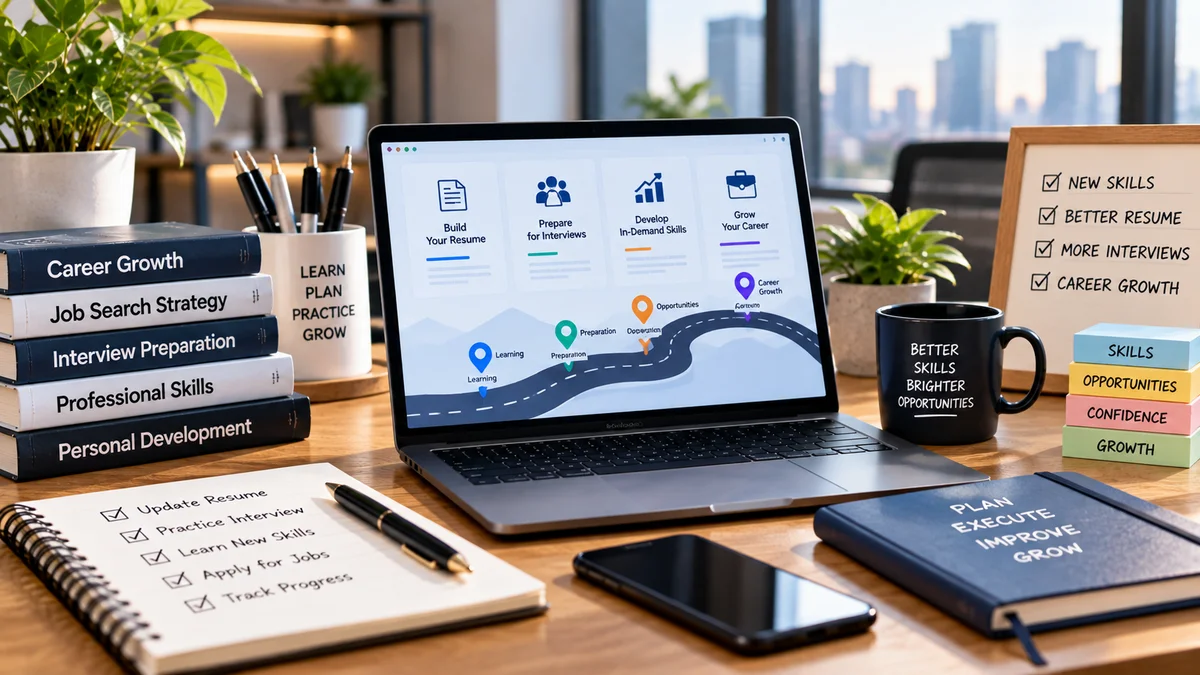
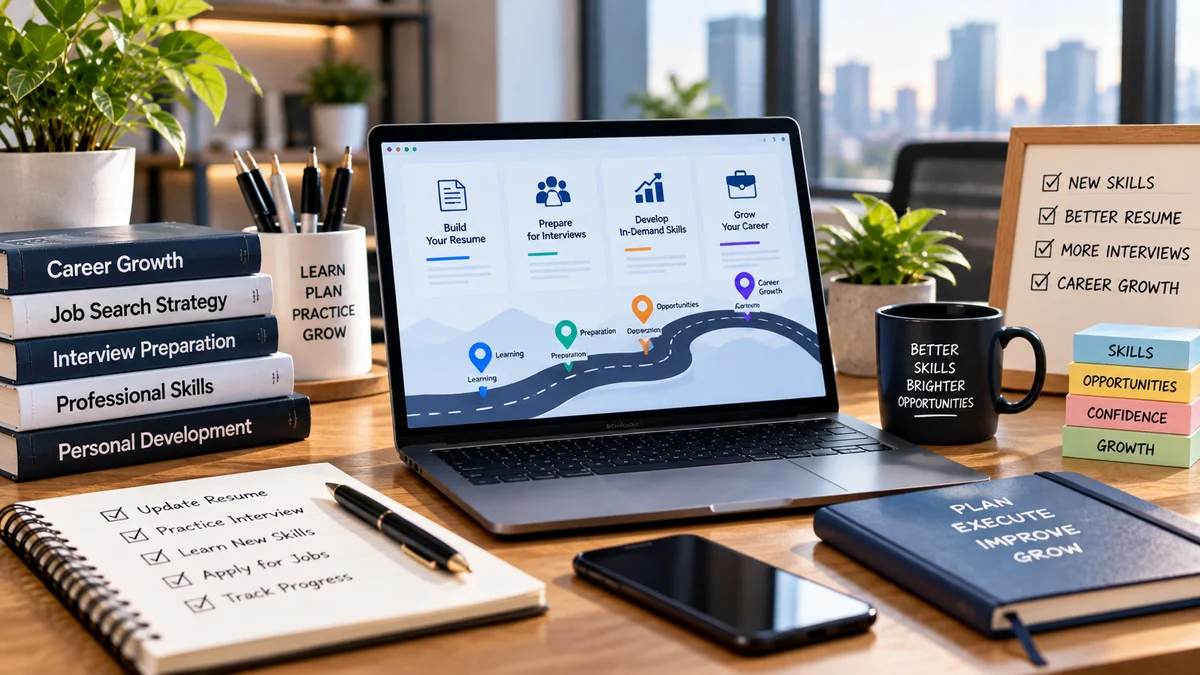
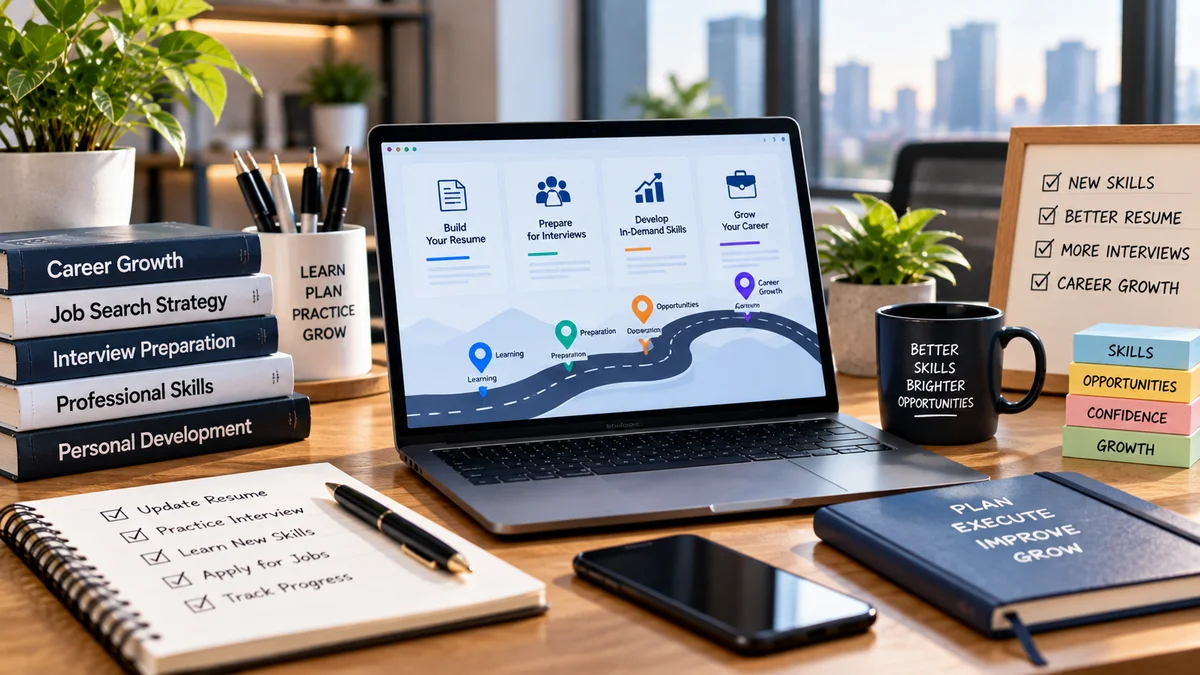
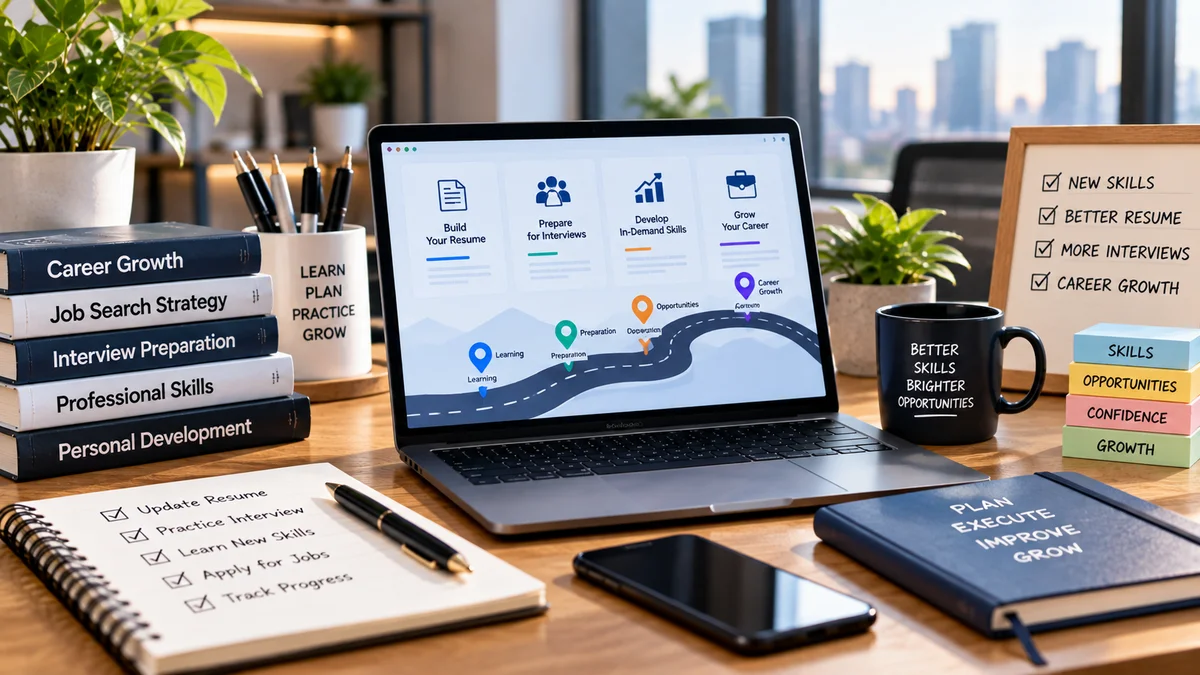
A career roadmap is a practical plan that connects your current position to a desired career direction through skills, experience, goals and actionable steps.
This guide explains how to build one from scratch.
What Is a Career Roadmap?
A career roadmap is a structured plan for your professional development.
It can include:
Career goals
Target roles
Skills
Experience
Education
Certifications
Projects
Networking
Job-search activities
Short-term milestones
Long-term objectives
For example:
Current Role
     ↓
Identify Target Career
     ↓
Identify Required Skills
     ↓
Find Skill Gaps
     ↓
Learn & Practice
     ↓
Build Experience
     ↓
Apply for Relevant Roles
     ↓
Review & Adjust
The roadmap gives you a direction without requiring you to predict every step of your career.
Why Is a Career Roadmap Important?
Without a clear direction, professional development can become reactive.
You might:
Take random courses
Collect certifications without applying them
Apply for jobs without improving relevant skills
Change career direction frequently
Spend time learning skills unrelated to your target role
A roadmap helps you prioritize.
Instead of asking:
“What should I learn?”
You can ask:
“What should I learn to move toward the role I want?”
That is a much more useful question.
Career Roadmap vs Career Plan
These terms are sometimes used interchangeably, but there is a useful distinction.
Career Plan
A career plan can describe your broader professional goals and strategy.
Career Roadmap
A roadmap focuses more heavily on the sequence of actions and milestones required to move forward.
For example:
Career goal: Become a data analyst.
Roadmap:
Learn Excel.
Learn SQL.
Learn data visualization.
Build projects.
Create a portfolio.
Apply for relevant positions.
Continue developing advanced skills.
The roadmap turns the goal into actions.
Step 1: Understand Your Current Position
Before deciding where you want to go, understand where you are now.
Write down:
Current role
Previous experience
Existing skills
Education
Certifications
Projects
Strengths
Areas you need to improve
Industries you understand
Types of work you enjoy
Types of work you want to avoid
You don't need to create a perfect assessment.
The objective is to establish a realistic starting point.
Create a Current-Skills Inventory
Make a simple table.
Skill | Current Level | Evidence |
|---|---|---|
Excel | Intermediate | Used for reporting |
Communication | Intermediate | Presentations and meetings |
Data Analysis | Beginner | Completed basic projects |
SQL | Beginner | Currently learning |
Project Management | Beginner | Assisted on projects |
The evidence column is particularly useful.
Instead of simply saying:
“I am good at communication.”
identify evidence:
“I regularly present project updates to clients.”
This makes your assessment more practical.
Step 2: Define Your Career Direction
You don't necessarily need to identify your exact lifelong career.
Start with a direction.
For example:
Technology
Marketing
Data
Finance
Design
Sales
Operations
Human resources
Entrepreneurship
Then narrow it down.
For example:
Technology → Data → Data Analytics → Data Analyst
Or:
Marketing → Performance Marketing → Paid Media → Performance Marketing Specialist
This creates a clearer target.
Step 3: Choose a Target Role
Once you have a general direction, identify one or more realistic target roles.
For example:
Data Analyst
Performance Marketing Specialist
Product Designer
Business Analyst
Project Coordinator
Software Developer
The target role doesn't need to be permanent.
You can revise it as you learn more about the field.
Step 4: Study Real Job Descriptions
One of the most useful ways to build a career roadmap is to study actual job descriptions for your target role.
Look for repeated requirements.
For example, suppose you review several entry-level data analyst positions and repeatedly see:
Excel
SQL
Data visualization
Communication
Basic statistics
These recurring requirements provide clues about the skills you should prioritize.
Create a table:
Requirement | Frequency | Your Level |
|---|---|---|
Excel | High | Intermediate |
SQL | High | Beginner |
Power BI | Medium | Beginner |
Communication | High | Intermediate |
Statistics | Medium | Beginner |
This is much more useful than randomly choosing courses.
Step 5: Identify Your Skill Gaps
A skill gap is the difference between the capabilities you currently have and those required for your target role.
For example:
Target Role
     ↓
Required Skills
     ↓
Compare with Current Skills
     ↓
Identify Gaps
Suppose your target role requires:
Excel
SQL
Power BI
Data analysis
And you currently know:
Excel
Basic data analysis
Your gaps may include:
SQL
Power BI
Now you have a much clearer learning priority.
Don't Try to Eliminate Every Skill Gap
A common mistake is trying to learn everything mentioned in a job description.
Job descriptions can contain long lists of requirements.
You don't necessarily need to master every tool before applying.
Instead, prioritize skills based on:
Importance
How important is the skill to the target role?
Frequency
How often does it appear across relevant job descriptions?
Current ability
How far are you from being able to use it?
Learning value
Will learning it help you perform meaningful work?
Step 6: Separate Skills Into Categories
A useful approach is to divide skills into four groups.
Essential Skills
Skills you are likely to need regularly in the target role.
Supporting Skills
Skills that improve your effectiveness but may not be central.
Differentiating Skills
Skills that can help you stand out in certain situations.
Future Skills
Skills you may need later as your responsibilities grow.
For example:
Target: Digital Marketing
Essential:
Campaign management
Analytics
Advertising platforms
Supporting:
Communication
Reporting
Presentation
Differentiating:
Automation
Advanced measurement
Data analysis
Future:
Strategy
Team management
Budget planning
This structure helps prevent information overload.
Step 7: Create Short-Term and Long-Term Goals
Don't create only a five-year goal.
Break your roadmap into smaller time horizons.
Short term
Approximately the next few weeks or months.
Examples:
Learn Excel fundamentals
Complete an SQL course
Update your resume
Build one project
Medium term
Several months to around a year.
Examples:
Build a portfolio
Gain relevant experience
Apply for target positions
Develop intermediate skills
Long term
Beyond your immediate transition.
Examples:
Move into a senior role
Take ownership of projects
Develop leadership skills
Specialize in a specific area
The exact timeframes should depend on your situation.
Step 8: Turn Goals Into Actions
A goal without an action plan is difficult to execute.
Compare:
“Improve my SQL skills.”
with:
“Complete SQL fundamentals and practice 30 queries over the next six weeks.”
The second goal gives you something measurable.
A useful structure is:
Goal → Action → Deadline → Evidence
For example:
Goal | Action | Deadline | Evidence |
|---|---|---|---|
Learn SQL | Complete beginner course | 6 weeks | Certificate + practice |
Build portfolio | Create 2 projects | 8 weeks | Published projects |
Improve resume | Rewrite target-role resume | 2 weeks | Updated resume |
Step 9: Choose the Right Learning Method
You don't need to learn everything through courses.
Different skills require different learning methods.
Courses
Useful for structured knowledge.
Books
Useful for deeper concepts.
Tutorials
Useful for specific tasks.
Projects
Useful for practical experience.
Documentation
Useful for learning technical tools directly.
Practice exercises
Useful for developing fluency.
Mentorship
Useful for feedback and real-world perspective.
Work experience
Often one of the most valuable ways to develop practical skills.
A strong learning plan combines several methods.
Learn Through Projects
One of the biggest differences between knowing about a skill and being able to use it is practice.
Suppose you're learning SQL.
Instead of only watching SQL tutorials, create a small project.
For example:
E-commerce Sales Analysis
Use tables for:
Customers
Products
Orders
Transactions
Then answer questions such as:
Which products generated the most revenue?
Which customers placed the most orders?
Which month had the highest sales?
What is the average order value?
This gives you evidence that you can actually use the skill.
Step 10: Build Evidence of Your Skills
Employers don't only want to know what you've studied.
They often need evidence that you can apply your knowledge.
Evidence can include:
Projects
Portfolio
Case studies
Work samples
Certifications
Internships
Freelance work
Volunteer work
Relevant professional experience
For example:
Instead of saying:
“I know Excel.”
You could show:
“Created a sales dashboard using PivotTables, XLOOKUP and charts.”
The second statement provides evidence of application.
Step 11: Build Your Professional Profile
Your career roadmap should include your professional presence.
Depending on your field, this could include:
Resume
Keep it relevant to your target role.
Highlight your skills, experience, projects and professional interests.
Portfolio
Show practical work where appropriate.
GitHub
Useful for many technology and coding roles.
Professional communities
Participate in relevant discussions and networking opportunities.
The goal is consistency.
Your resume, LinkedIn profile and portfolio should tell a broadly consistent professional story.
Step 12: Build a Network
Career development isn't only about skills.
Professional relationships can help you:
Learn about industries
Discover opportunities
Understand different career paths
Get feedback
Learn from experienced professionals
Networking doesn't have to mean asking everyone for a job.
You can start by:
Following professionals in your field
Reading their content
Participating in relevant communities
Attending professional events
Asking thoughtful questions
Sharing useful work
Focus on building genuine professional relationships.
Step 13: Start Applying Before You Feel Completely Ready
A common problem is waiting until you feel that you have mastered everything.
For many roles, you don't need to meet every requirement before applying.
If you meet the core requirements and can demonstrate relevant skills, consider applying while continuing to learn.
The application process itself can provide useful information.
For example:
Which skills are repeatedly requested?
Which interview questions are difficult?
Where are your knowledge gaps?
What feedback are you receiving?
You can use that information to improve your roadmap.
Step 14: Prepare for Interviews
Your roadmap should include interview preparation.
Depending on the target role, prepare for:
Introduction questions
Role-specific questions
Technical questions
Behavioral questions
Scenario-based questions
Questions about your projects
Questions about your previous experience
Don't just memorize answers.
Understand the concepts and practice explaining them clearly.
Step 15: Track Your Progress
A roadmap only becomes useful when you review it.
Create a simple tracker.
Area | Status | Next Action |
|---|---|---|
Excel | Completed | Practice advanced analysis |
SQL | In progress | Finish joins |
Portfolio | Not started | Select first project |
Resume | Completed | Tailor for target roles |
Applications | In progress | Apply to relevant roles |
Networking | In progress | Connect with professionals |
You can use:
Excel
Google Sheets
Notion
A notebook
A task-management application
The tool matters less than consistently tracking progress.
Use Milestones Instead of Only Deadlines
A deadline tells you when something should happen.
A milestone tells you what you should be able to do.
For example:
Instead of:
“Learn SQL by June.”
Use:
“By June, I should be able to write queries using joins, grouping, filtering and subqueries.”
That gives you a measurable outcome.
Review Your Career Roadmap Regularly
Your roadmap shouldn't be permanent.
Review it periodically.
Ask:
Is my target role still relevant?
Am I enjoying this type of work?
Are the skills I'm learning still relevant?
What feedback am I receiving?
What opportunities am I seeing?
What skills do employers repeatedly request?
What should I stop learning?
What should I prioritize next?
Career planning is an iterative process.
A Simple Career Roadmap Template
You can use the following structure:
1. Current Position
Current role:
[Your current role]
Experience:
[Years/areas of experience]
Strengths:
[Your strongest skills]
Development areas:
[Skills to improve]
2. Career Direction
Target field:
[Industry or domain]
Target role:
[Role]
Possible next role:
[Next realistic step]
Long-term direction:
[Broader professional goal]
3. Skill Requirements
Skill | Importance | Current Level | Target Level |
|---|---|---|---|
Skill 1 | High | Beginner | Intermediate |
Skill 2 | High | Intermediate | Advanced |
Skill 3 | Medium | Beginner | Intermediate |
4. Learning Plan
Skill | Learning Method | Practice |
|---|---|---|
Skill 1 | Course | Project |
Skill 2 | Tutorial | Exercises |
Skill 3 | Documentation | Real-world task |
5. Career Actions
Update resume
Improve LinkedIn
Build portfolio
Network
Apply for relevant roles
Practice interviews
Track applications
Example Career Roadmap
Suppose someone wants to become a Data Analyst.
Starting point
Basic Excel
No SQL
No portfolio
Basic understanding of data
Target
Data Analyst
Roadmap
Month 1
Learn:
Advanced Excel
Data cleaning
PivotTables
Basic statistics
Month 2
Learn:
SQL fundamentals
Filtering
Aggregation
Joins
Month 3
Learn:
Power BI
Dashboard creation
Data visualization
Month 4
Build:
Sales analysis project
Customer analysis project
Portfolio
Month 5
Prepare:
Resume
LinkedIn
Interview questions
SQL practice
Month 6
Focus on:
Applications
Networking
Interview preparation
Portfolio improvements
This is only an example. A real roadmap should be adapted to the person's experience, target roles and available time.
Career Roadmap for Career Changers
Career changers need to consider one additional factor:
How can existing experience transfer to the new field?
Suppose someone worked in customer support and wants to move into project management.
They may already have transferable skills such as:
Communication
Customer management
Problem solving
Documentation
Time management
Coordination
The roadmap doesn't need to start from zero.
Instead, identify:
Existing transferable skills + New technical/domain skills = Career transition
This can make the transition more practical.
Don't Collect Certifications Without a Purpose
Certifications can be useful, but collecting certificates should not become the goal itself.
Before starting a certification, ask:
Is it relevant to my target role?
Is it recognized in the field?
Will I actually learn useful skills?
Can I apply the knowledge through a project?
Does it complement my existing experience?
A certification is more useful when it supports a larger career objective.
Avoid the "Learn Everything" Trap
Modern professionals can learn hundreds of skills.
You could spend years learning:
AI
Programming
Data
Marketing
Design
Cloud
Cybersecurity
Project management
But you don't need to master everything.
Instead, think in terms of:
Core skill → Supporting skills → Specialized skill
For example:
Data Analytics
Core:
SQL
Data analysis
Supporting:
Excel
Visualization
Specialization:
Marketing analytics
This creates a more focused professional profile.
Build a T-Shaped Skill Profile
A useful career-development concept is the T-shaped skill profile.
The horizontal part represents broad knowledge.
The vertical part represents deeper expertise in one area.
For example:
Marketing   Data   Technology   Communication
    ────────────────┬────────────
                    │
                    │
                    │
                    │
             Deep expertise
You understand related areas broadly while developing significant depth in your primary specialty.
This can be useful as your career develops.
Common Career Roadmap Mistakes
1. Setting Only Long-Term Goals
“Become a senior manager” isn't enough.
Define the steps required to get there.
2. Learning Without a Target Role
Don't choose courses simply because they're popular.
Connect learning to your career direction.
3. Ignoring Practical Experience
Knowledge becomes more valuable when you can demonstrate how you applied it.
4. Trying to Learn Too Many Skills
Prioritize.
5. Never Reviewing the Plan
Your interests, industry requirements and opportunities can change.
6. Comparing Your Timeline With Others
People start careers at different ages and from different circumstances.
Focus on your own progress.
7. Treating the Roadmap as Permanent
A roadmap is a guide, not a contract.
Change it when your circumstances or goals change.
A Simple Weekly Career Development Routine
You don't need to spend your entire day on career development.
For example, you could divide your weekly effort between:
Learning
Develop one important skill.
Practice
Apply that skill to a realistic task.
Career Development
Improve your resume, portfolio or professional profile.
Networking
Build a few meaningful professional connections.
Job Search
Research and apply for relevant positions if you're actively looking.
Review
Check what worked and decide what to prioritize next week.
The exact amount of time depends on your circumstances.
Frequently Asked Questions
What is the purpose of a career roadmap?
A career roadmap provides direction by connecting your current skills and experience with a desired career direction and identifying practical steps to move forward.
How far ahead should a career roadmap go?
There is no universal timeframe. A useful roadmap can include immediate actions, medium-term milestones and a broader long-term direction.
Should I have only one career goal?
Not necessarily. You can have a primary target and alternative paths. Keeping the roadmap focused, however, can make your immediate actions clearer.
Can I change my career roadmap?
Yes. Career plans should be reviewed and adjusted as you gain experience, learn more about the field and encounter new opportunities.
Do I need a certification for my target career?
Not always. Some roles require or strongly value specific qualifications, while others place greater emphasis on skills and experience. Check current requirements for the roles you're targeting.
How do I identify the right skills to learn?
Study multiple job descriptions for your target role, identify recurring requirements and compare them with your current skills and experience.
Can a career roadmap help with a career change?
Yes. It can help you identify transferable skills, new skills to develop, relevant experience to gain and practical steps for transitioning into the new field.
How often should I review my career roadmap?
A periodic review—such as monthly or quarterly—can help you check progress and adjust priorities. Review it sooner if your career goals or circumstances change significantly.
Conclusion
A career roadmap doesn't need to predict your entire professional future.
Its purpose is to help you answer a much simpler question:
What should I do next to move toward the career I want?
A practical roadmap can follow this sequence:
Understand your current position → Choose a career direction → Identify a target role → Study job requirements → Find skill gaps → Learn and practice → Build evidence → Improve your professional profile → Apply and network → Prepare for interviews → Review and adjust
The most important part is turning career goals into specific actions.
Instead of simply saying:
“I want to grow my career.”
define what growth means, identify the skills required, create milestones and start working on the next step.
Your career roadmap doesn't have to be perfect.
It just needs to be clear enough to help you take the next useful step.