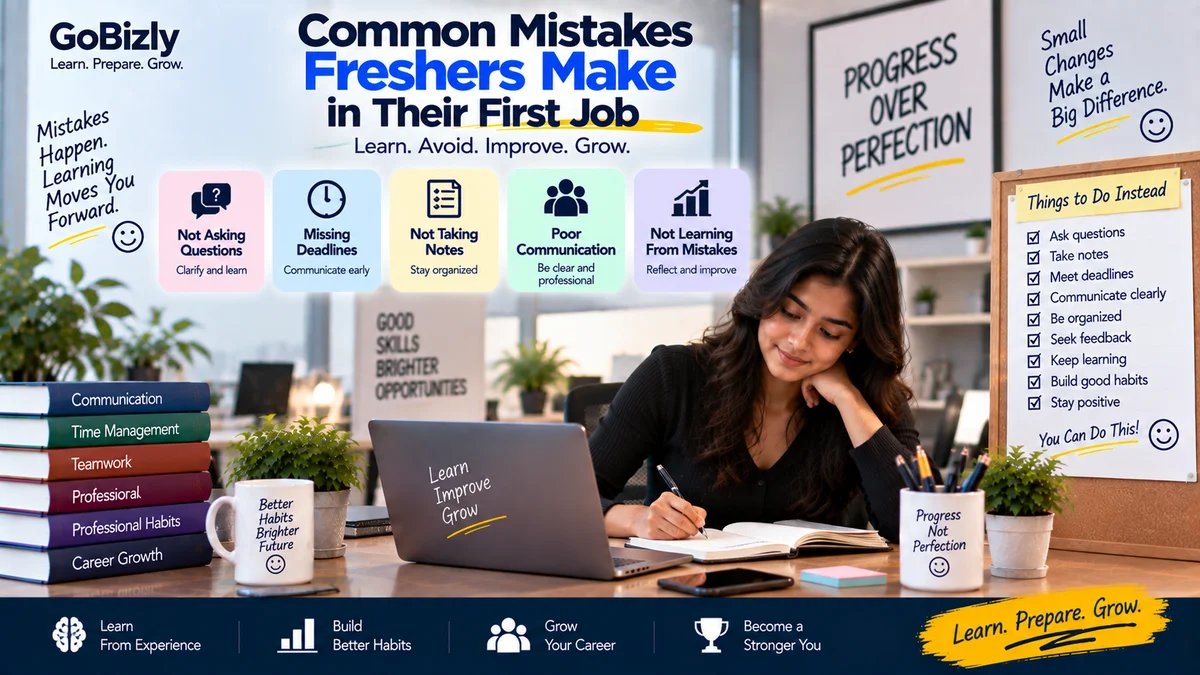
What to Do in Your First 30 Days at a New Job
What to Do in Your First 30 Days at a New Job
Starting your first job can be exciting and unfamiliar at the same time.
You may be learning:
New tools
New processes
New colleagues
New responsibilities
New communication styles
New expectations
You don't need to know everything immediately.
Your first month should focus on understanding the environment, learning your responsibilities, building professional relationships and establishing good working habits.
1. Understand Your Role
Start by understanding:
Your responsibilities
Your priorities
Your reporting structure
Your expected deliverables
Important deadlines
Performance expectations
If something is unclear, ask for clarification.
2. Learn the Team Structure
Understand:
Who your manager is
Who you work with
Who handles related processes
Who approves your work
Where to go when you need help
This makes communication easier.
3. Learn the Tools
Your organization may use:
Email
Chat platforms
Project-management tools
Spreadsheets
CRM systems
Analytics platforms
Internal applications
Learn the tools relevant to your role.
Keep notes while learning.
4. Understand Processes
Don't focus only on individual tasks.
Try to understand how your work fits into the broader process.
Ask:
What happens before my task?
What happens after my task?
Who uses my output?
Understanding the workflow can help you make better decisions.
5. Take Notes
Create a simple work notebook or digital document.
Record:
New terms
Processes
Instructions
Questions
Useful links
Feedback
Important contacts
Review your notes regularly.
6. Ask Questions Thoughtfully
It's normal to have questions in your first month.
Before asking, try to understand the issue yourself.
Then ask a specific question.
For example:
"I reviewed the process document and completed the first step. I'm unsure whether the second step should happen before or after approval. Could you clarify?"
This gives the other person useful context.
7. Understand Communication Norms
Every workplace has different communication habits.
Observe:
How meetings are conducted
How updates are shared
Which channel is used for urgent matters
How emails are structured
How decisions are documented
Adapt to the workplace while maintaining professional communication.
8. Be Reliable
One of the simplest ways to build trust is to do what you say you'll do.
If you commit to a task:
Understand the requirement
Track the deadline
Complete the work
Communicate blockers early
If something will be delayed, communicate before the deadline where possible.
9. Don't Be Afraid to Ask for Help
Asking for help doesn't mean you cannot learn independently.
Try first.
Then ask when you're genuinely blocked.
Explain:
What you tried
What happened
Where you're stuck
This makes the question easier to answer.
10. Learn From Feedback
Your first month may involve corrections.
Don't automatically interpret every correction negatively.
Ask:
What should I do differently next time?
Write down recurring feedback and work on it.
11. Understand Your Manager's Expectations
Ask appropriate questions about:
Priorities
Deadlines
Quality expectations
Communication
Progress updates
Knowing expectations early can prevent misunderstandings.
12. Build Professional Relationships
You don't need to become close friends with everyone.
Start with basic professional relationships.
Be:
Respectful
Helpful
Reliable
Approachable
Interested in learning
Over time, relationships can develop naturally.
13. Observe Before Changing Things
When you are new, you may notice ways something could be improved.
That's useful.
But first understand why the existing process works the way it does.
Ask questions before suggesting major changes.
14. Keep Track of Your Achievements
Record:
Tasks completed
Projects contributed to
Problems solved
Skills learned
Positive feedback
New responsibilities
This information can become useful later for performance reviews and resume updates.
15. Avoid Trying to Impress Everyone
You don't need to prove yourself by saying yes to everything.
Focus on:
Doing your assigned work well
Learning
Communicating
Being dependable
Professional growth usually develops over time.
16. Learn the Organization's Documentation
Many workplaces depend heavily on documentation.
Learn where to find:
Process documents
Guidelines
Templates
Reports
Policies
Project information
Good documentation can reduce repeated questions.
17. Manage Your Time
Start understanding how long different tasks take.
Use:
Calendar
Task list
Notes
Project-management tools
Prioritize tasks according to urgency and importance.
18. Schedule a 30-Day Review
At the end of your first month, review:
What have I learned?
What can I now do independently?
What do I still need help with?
What feedback have I received?
What should I focus on next?
You can also discuss progress with your manager when appropriate.
First 30 Days Checklist
☐ Understand role
☐ Learn team structure
☐ Understand processes
☐ Learn relevant tools
☐ Take notes
☐ Ask questions
☐ Learn communication norms
☐ Track deadlines
☐ Communicate blockers
☐ Request feedback
☐ Build professional relationships
☐ Record achievements
☐ Review progress
Conclusion
Your first month at a new job isn't about knowing everything.
It's about learning how the organization works, understanding your responsibilities and developing reliable professional habits.
Be curious.
Take notes.
Ask thoughtful questions.
Accept feedback.
Communicate clearly.
And give yourself time to learn.
Learn the environment. Build good habits. Earn trust through consistent work.
Learn. Prepare. Grow.