Digital Marketing Basics: A Beginner’s Guide
Digital Marketing Basics: A Beginner’s Guide
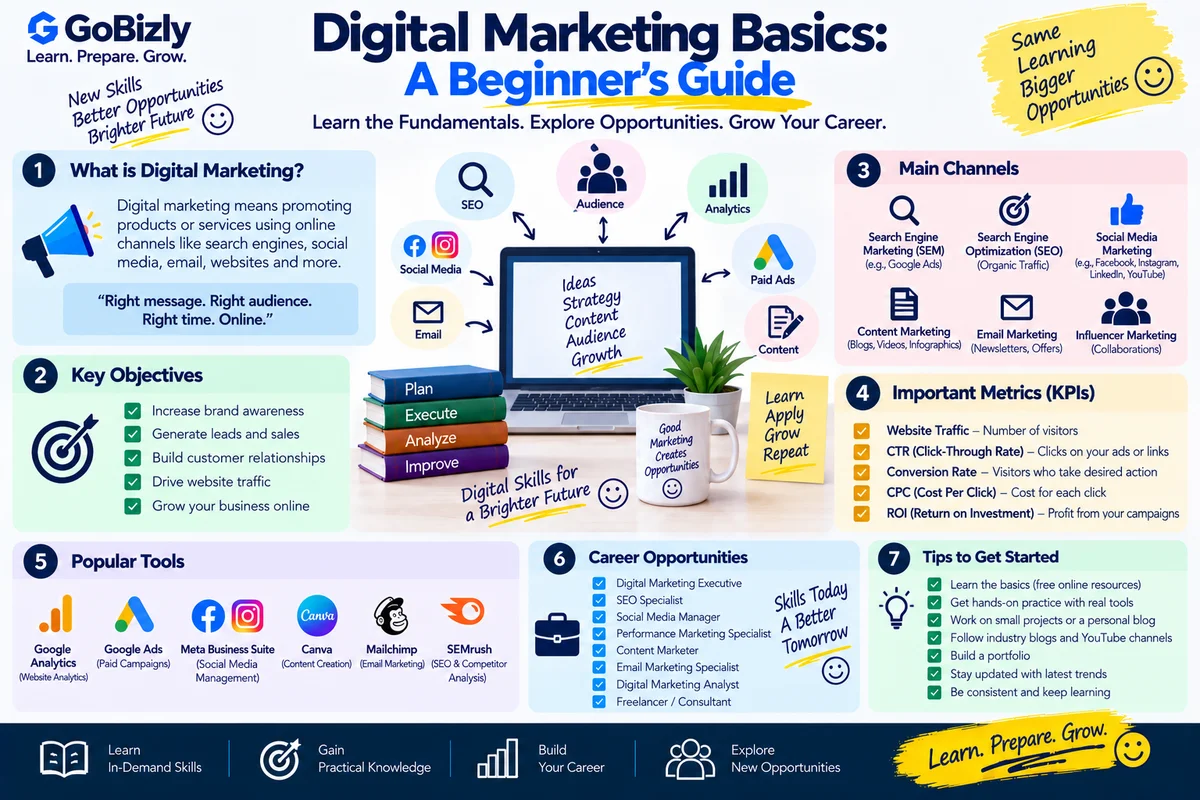
Digital marketing is the use of digital channels, platforms and technologies to promote products, services, brands or organizations and connect with audiences.
It covers many different activities, including:
Search engine optimization
Paid advertising
Social media marketing
Content marketing
Email marketing
Analytics
Marketing automation
Influencer marketing
Performance marketing
You don't need to learn everything at once.
Understanding the basic ecosystem is a good starting point.
1. What Is Digital Marketing?
Traditional marketing can use channels such as television, newspapers, radio and physical advertising.
Digital marketing uses digital environments such as:
Search engines
Websites
Social platforms
Apps
Email
Digital advertising networks
The objective depends on the business and campaign.
It could be:
Awareness
Website traffic
Leads
Sales
App installs
Engagement
Customer retention
2. Understand the Digital Marketing Funnel
A simplified customer journey can look like:
Awareness → Consideration → Conversion → Retention
Different channels can support different stages.
For example:
Social media can help generate awareness.
Search can capture existing intent.
Email can support engagement and retention.
The actual customer journey can be more complex.
3. Search Engine Optimization
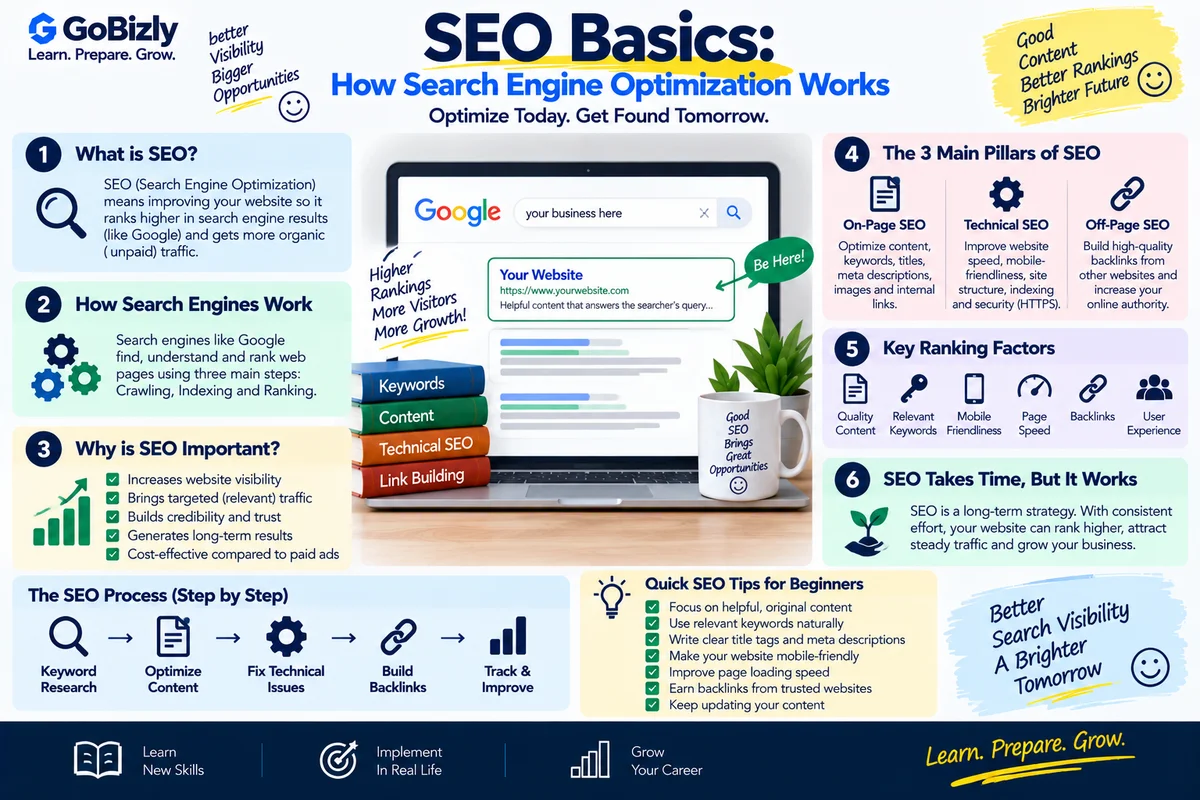
SEO focuses on improving a website's visibility in organic search results.
Common areas include:
On-Page SEO
Content, headings, keywords and page structure.
Technical SEO
Site performance, crawlability and technical configuration.
Off-Page SEO
External signals such as links and online references.
SEO generally requires consistent effort rather than immediate results.
4. Paid Search Advertising
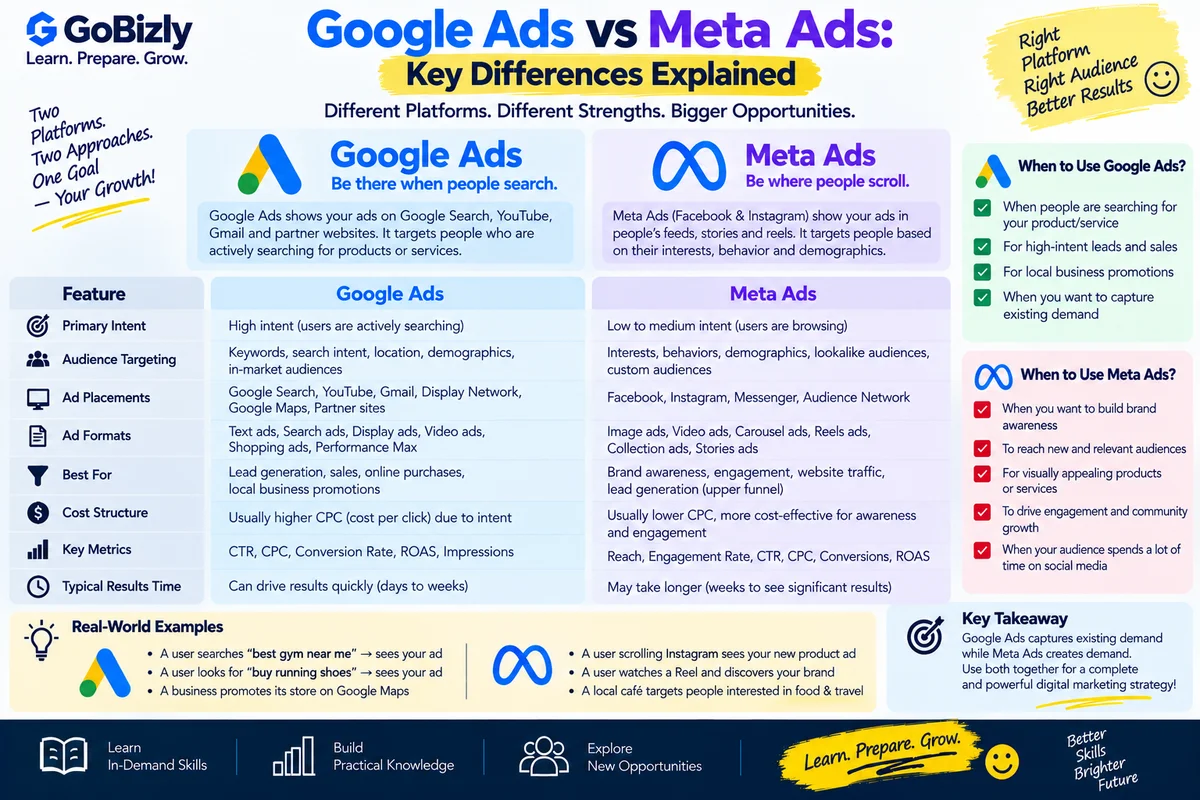
Paid search advertising allows advertisers to show ads on search platforms based on targeting and bidding systems.
Google Ads is a common example.
Campaigns can target relevant search queries and can be optimized based on business objectives.
5. Social Media Marketing
Social media marketing uses platforms such as:
Instagram
Facebook
LinkedIn
YouTube
Other relevant social networks
Activities can include:
Organic content
Community engagement
Paid advertising
Influencer collaborations
The appropriate platform depends on the audience and business.
6. Content Marketing
Content marketing involves creating useful or relevant content for a target audience.
Examples include:
Blog articles
Videos
Guides
Infographics
Case studies
Newsletters
Good content should provide a reason for the audience to consume it.
7. Email Marketing
Email marketing can support:
Lead nurturing
Customer communication
Product updates
Promotions
Retention
Effective email marketing depends on factors such as audience segmentation, relevance and timing.
8. Performance Marketing
Performance marketing focuses strongly on measurable outcomes.
Depending on the campaign, KPIs can include:
Clicks
Leads
Conversions
Cost per acquisition
Revenue
Return on ad spend
The appropriate KPI depends on the campaign objective.
9. Programmatic Advertising
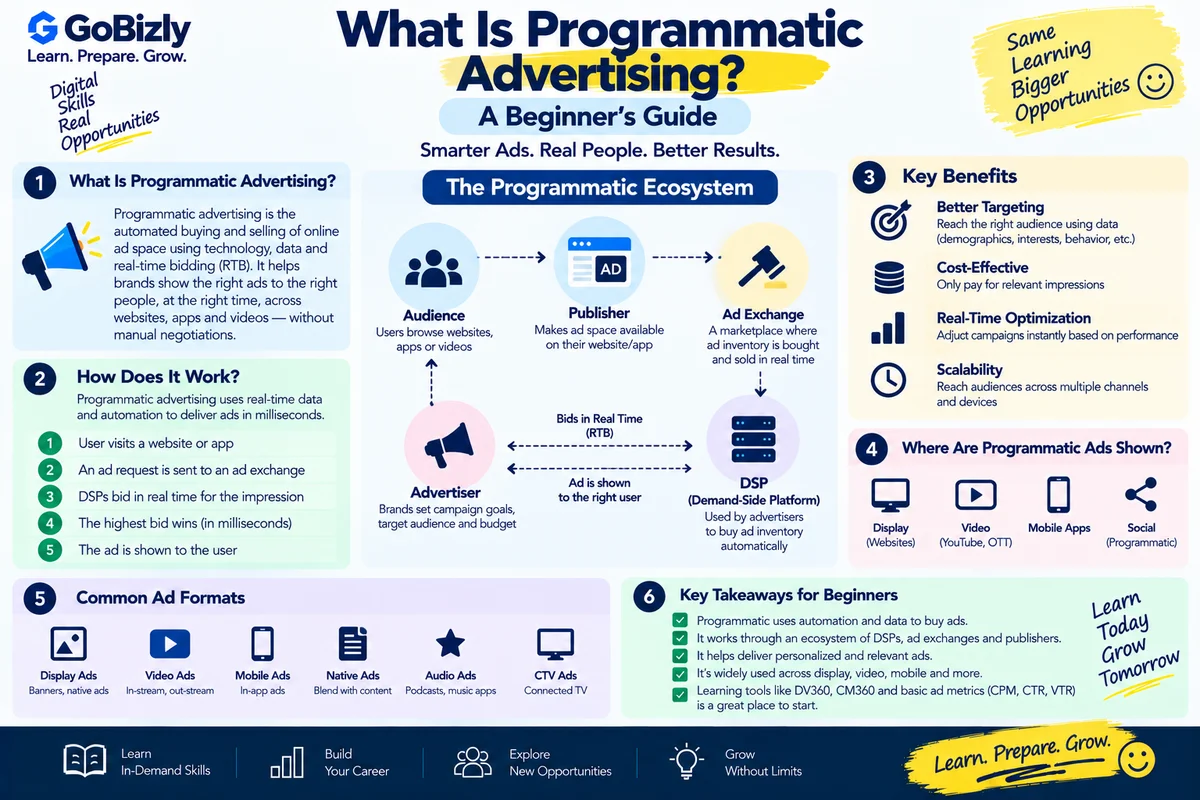
Programmatic advertising uses technology and automated systems to buy and sell digital advertising inventory.
It can involve:
DSPs
SSPs
Ad exchanges
Ad servers
Data and audience targeting
Programmatic is an important part of modern digital advertising.
10. Web Analytics
Analytics helps marketers understand what users do after interacting with marketing channels.
Common measurements include:
Users
Sessions
Traffic sources
Engagement
Conversions
Revenue
Analytics can help connect marketing activity with business outcomes.
11. Tracking and Measurement
Digital campaigns often require tracking technologies to measure outcomes.
Examples include:
Conversion tracking
Tags
Pixels
Analytics events
UTM parameters
Accurate measurement helps marketers understand campaign performance.
12. Important Digital Marketing Metrics
Some common metrics include:
CTR
Click-through rate
Measures clicks relative to impressions.
CPC
Cost per click
Measures the cost associated with clicks.
CPM
Cost per thousand impressions
Commonly used in display and programmatic advertising.
CPA
Cost per acquisition
Measures the cost associated with acquiring a conversion.
Conversion Rate
Measures conversions relative to a defined set of interactions, such as visits or clicks.
Always consider how a platform defines each metric.
13. Audience Targeting
Digital platforms can provide different targeting options.
Depending on the platform, these may include:
Keywords
Demographics
Interests
Context
Geographic targeting
First-party audiences
Remarketing
Targeting should align with the campaign objective.
14. Landing Pages
A landing page is the destination users reach after clicking an advertisement or other marketing link.
A useful landing page should generally have:
Clear messaging
Relevant content
Strong user experience
Appropriate call to action
Mobile-friendly design
The landing page should match the promise made by the marketing message.
15. Marketing Automation
Marketing automation can help organizations manage repetitive marketing activities.
Examples include:
Email workflows
Lead nurturing
Customer segmentation
Notifications
Campaign triggers
Automation can improve consistency when implemented appropriately.
16. Why Data Matters
Digital marketing generates large amounts of data.
Marketers can use data to understand:
Which channels generate traffic
Which campaigns produce conversions
Which audiences engage
Where users drop off
Data should support decisions rather than replace judgment.
17. Learn the Customer Journey
Don't evaluate channels in isolation.
A customer might:
See a social media post.
Search for the brand.
Visit the website.
Return later through an advertisement.
Complete a purchase.
Different touchpoints can contribute to the final outcome.
18. Start With One Area
Beginners don't need to learn every digital marketing discipline simultaneously.
You could start with:
SEO
or
Google Ads
or
Social Media
or
Analytics
or
Programmatic Advertising
Build a foundation first, then expand.
19. Build Practical Skills
Don't only watch courses.
Practice by:
Creating sample campaigns
Analyzing websites
Building reports
Creating content plans
Practicing analytics
Working through campaign scenarios
Practical application helps reinforce concepts.
20. Build Your Digital Marketing Learning Path
A simple progression could be:
Digital Marketing Fundamentals
↓
Choose a Specialization
↓
Learn Platforms & Tools
↓
Practice With Projects
↓
Learn Analytics & Measurement
↓
Build a Portfolio
↓
Prepare for Interviews
Digital Marketing Checklist
☐ Understand digital marketing
☐ Learn SEO
☐ Learn paid search
☐ Understand social media marketing
☐ Learn content marketing
☐ Understand email marketing
☐ Learn performance marketing
☐ Explore programmatic
☐ Learn analytics
☐ Understand tracking
☐ Learn common KPIs
☐ Practice audience targeting
☐ Understand landing pages
☐ Build practical projects
Conclusion
Digital marketing is a broad field with many specializations.
Start with the fundamentals.
Understand how the different channels fit together.
Then choose an area to develop more deeply.
Combine platform knowledge with analytics, communication and practical experience.
Learn the ecosystem first. Specialize as you grow.
Learn. Prepare. Grow.