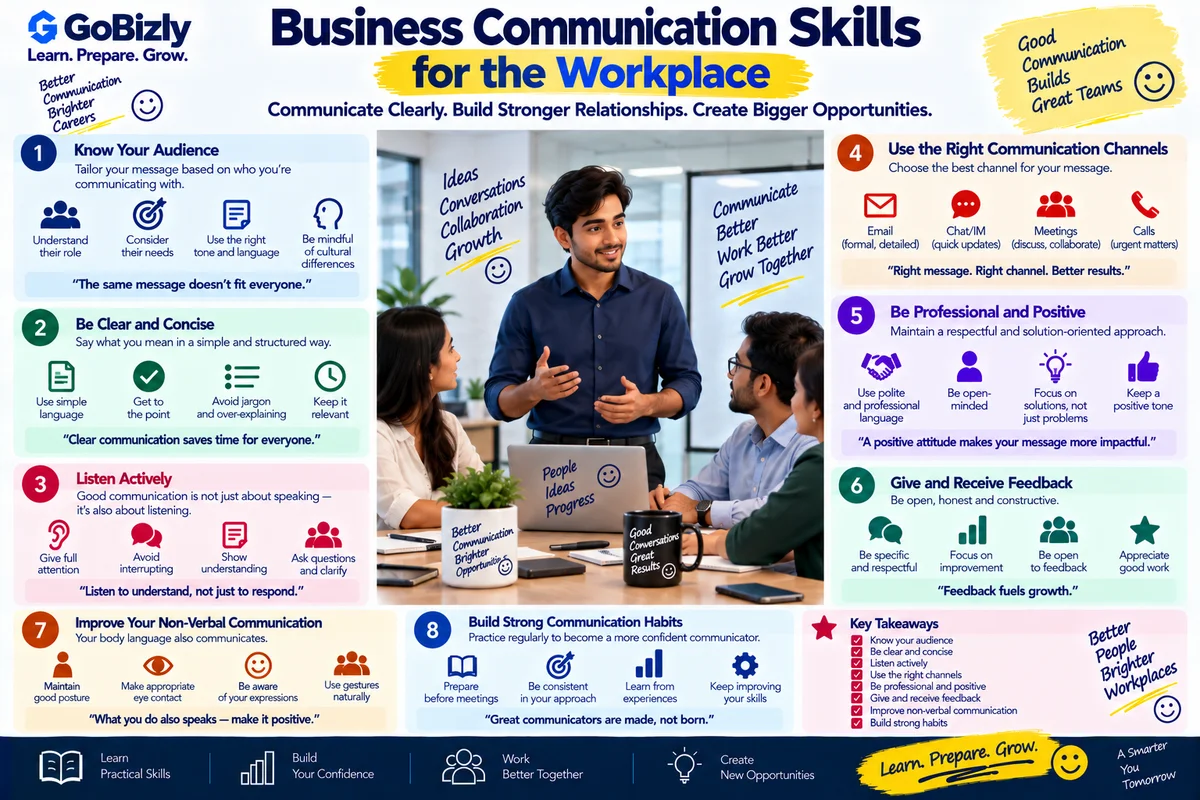
Business Communication Skills for the Workplace
Business Communication Skills for the Workplace
Communication is one of the most important skills professionals use every day.
You may have strong technical knowledge, but you still need to communicate that knowledge clearly to colleagues, managers, clients and other stakeholders.
Workplace communication isn't just about speaking well.
It includes:
Listening
Writing
Presenting
Asking questions
Giving updates
Explaining complex ideas
Handling disagreements
Giving and receiving feedback
Communicating professionally through digital channels
Good communication helps people understand what needs to happen, why it matters and what should happen next.
1. What Is Business Communication?
Business communication is the exchange of information within a professional environment.
It can happen through:
Face-to-face conversations
Meetings
Emails
Chat applications
Presentations
Reports
Phone calls
Video conferences
Documentation
The communication method should match the situation.
A quick clarification may only require a message.
A major project decision may require a meeting and written documentation.
2. Communicate With a Clear Objective
Before communicating, ask yourself:
What do I want the other person to understand or do?
For example, instead of sending:
"There is an issue with the campaign."
You could say:
"The campaign has stopped delivering because the audience segment is currently unavailable. I've identified the issue and am checking the audience refresh. I'll provide an update after validation."
The second message provides:
The problem
The likely reason
The action being taken
The expected next step
3. Keep Communication Structured
A useful structure for workplace communication is:
Context → Issue → Action → Next Step
For example:
Context: The campaign launched yesterday.
Issue: Delivery is below the expected level.
Action: I've reviewed targeting and creative status.
Next Step: I'm checking inventory availability and will update the team.
This structure is particularly useful when communicating with managers or clients.
4. Practice Active Listening
Communication isn't only about talking.
Active listening means paying attention to what the other person is actually saying.
Useful habits include:
Avoid interrupting
Listen for the main point
Ask clarifying questions
Confirm your understanding
Take relevant notes
Summarize important decisions
For example:
"Just to confirm, you want the report updated with campaign-level performance and delivered by 4 PM. Is that correct?"
This reduces misunderstandings.
5. Ask Better Questions
Asking questions demonstrates that you are trying to understand the situation.
Instead of:
"What should I do?"
Try:
"I've identified two possible approaches. The first will be faster, while the second provides more detailed validation. Which approach would you prefer?"
This shows preparation before asking for direction.
6. Learn to Explain Complex Topics Simply
Professionals often need to explain technical information to people who don't have the same level of knowledge.
A useful approach is:
Concept → Simple Explanation → Example → Impact
For example, when explaining conversion tracking:
"Conversion tracking helps us identify actions users take after interacting with an advertisement. For example, if someone clicks an ad and completes a form, the form submission can be recorded as a conversion. This helps us evaluate campaign performance."
Avoid unnecessary jargon.
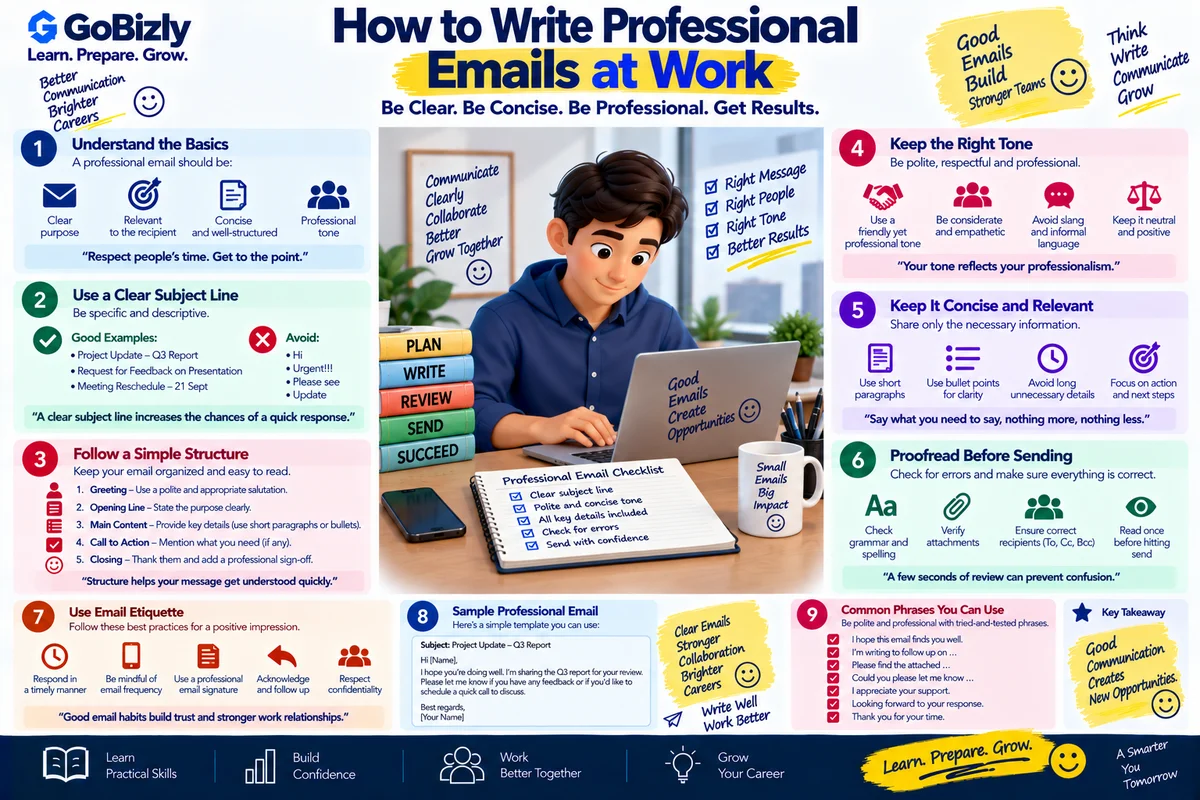
7. Professional Email Communication
A professional email generally needs:
Clear subject
Appropriate greeting
Purpose
Relevant details
Required action
Deadline if applicable
Professional closing
Avoid making the reader search through a long paragraph to understand what you need.
8. Communicate Bad News Professionally
Problems are unavoidable at work.
The goal isn't to hide them.
Communicate them early and clearly.
A useful structure is:
What happened → Impact → What you've done → Next step
For example:
"The report delivery was delayed because the source data wasn't available at the scheduled time. I've now received the data and am completing the validation. I'll share the final report by 3 PM."
This is more useful than simply saying:
"The report is delayed."
9. Give Constructive Feedback
Feedback should focus on the work or behavior rather than attacking the person.
Instead of:
"You didn't prepare this properly."
Try:
"The analysis contains useful information, but the key findings aren't clearly highlighted. Adding a summary at the beginning would make it easier to review."
Good feedback should ideally be:
Specific
Respectful
Actionable
Relevant
10. Receive Feedback Professionally
Receiving feedback can also be a professional skill.
Instead of becoming defensive, ask:
What specifically should I improve?
Can you give me an example?
What would a better approach look like?
What should I focus on first?
You don't have to agree with every piece of feedback immediately, but you should understand it before responding.
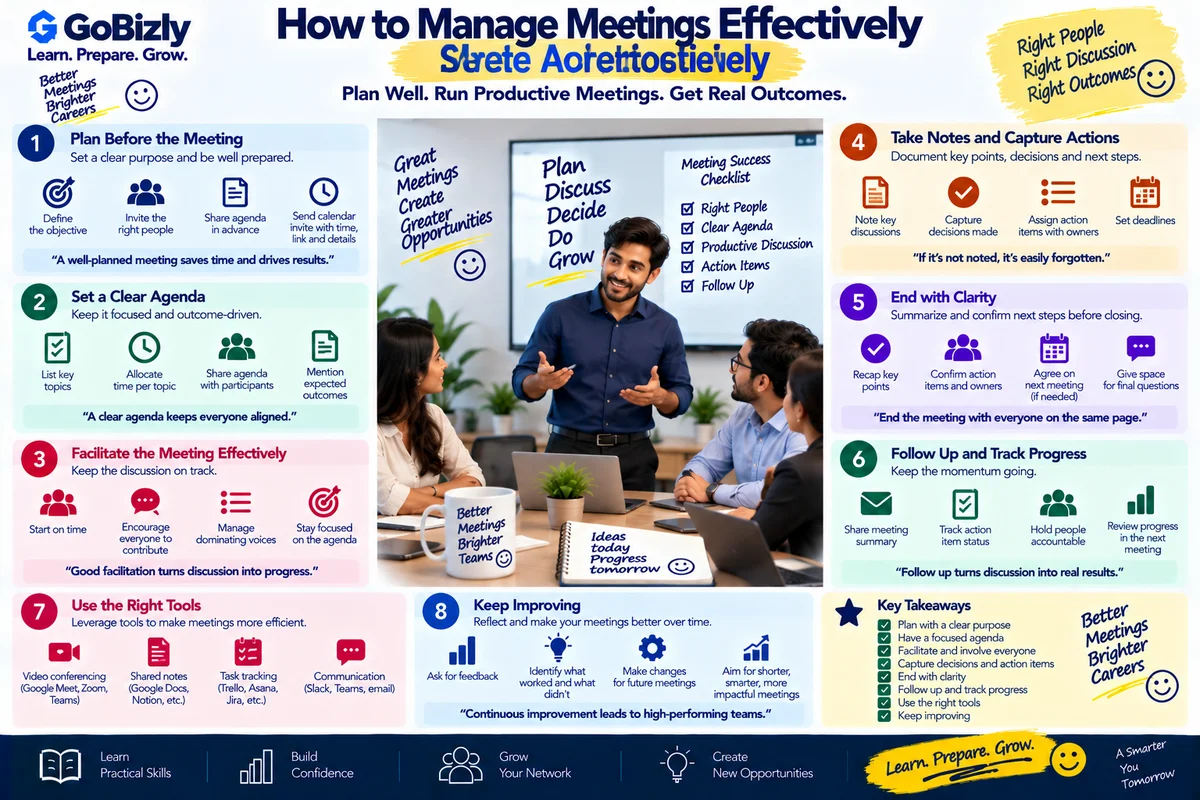
11. Communicate in Meetings
Before a meeting, know:
Why the meeting is happening
What you need to contribute
What decisions may be required
What information you need
During the meeting:
Stay on topic
Listen to others
Keep contributions concise
Ask relevant questions
Record important decisions
After the meeting, clarify ownership and deadlines.
12. Adapt to Your Audience
The same information may need to be communicated differently to different audiences.
Technical Team
You may need:
Technical details
Data
Configuration
Troubleshooting steps
Manager
You may need:
Business impact
Current status
Risks
Required decision
Client
You may need:
Clear explanation
Business impact
Recommended action
Timeline
Effective communication isn't about saying more.
It's about saying what the audience needs.
13. Written vs Verbal Communication
Choose the appropriate channel.
Use written communication when:
A record is useful
Details need to be documented
Someone needs to review information later
A decision needs confirmation
Use a conversation or meeting when:
The topic is complex
Multiple people need to discuss options
Immediate clarification is useful
Sensitive discussion requires context
Often, both are useful.
14. Communication in Remote Work
Remote teams depend heavily on written communication.
Be especially clear about:
Context
Priority
Ownership
Deadlines
Expected action
Instead of:
"Can you check this?"
Try:
"Could you review the campaign report and confirm whether the conversion numbers match the analytics data by 2 PM?"
15. Build Your Communication Skills Through Practice
You can practice by:
Writing professional emails
Explaining concepts aloud
Summarizing meetings
Presenting ideas
Practicing interview answers
Asking better questions
Reviewing your own communication
Communication improves through repeated application.
Workplace Communication Checklist
☐ Identify the objective before communicating
☐ Structure important messages
☐ Listen actively
☐ Ask clear questions
☐ Explain complex topics simply
☐ Write professional emails
☐ Communicate problems early
☐ Give constructive feedback
☐ Receive feedback professionally
☐ Prepare for meetings
☐ Adapt communication to the audience
☐ Document important decisions
☐ Practice regularly
Conclusion
Strong workplace communication isn't about using complicated language.
It's about being clear, relevant, respectful and purposeful.
Whether you're speaking with a colleague, manager or client, focus on what they need to understand and what action should happen next.
Clear communication turns information into action.
Learn. Prepare. Grow.